
The digital landscape is a vast ocean, and for new websites aiming to make waves in affiliate marketing, the current can be daunting. You’ve heard the success stories, seen the income reports, and now you’re ready to dive in. But how do you stand out from the millions of other sites vying for attention? The answer, my friend, lies squarely in mastering SEO. Without a solid understanding of how search engines work and how to optimize your content, even the most brilliant affiliate strategies can sink before they swim.
This comprehensive affiliate marketing SEO guide for new websites will equip you with the essential strategies and tactical insights you need to navigate the competitive waters of 2025, attract organic traffic, and ultimately, convert visitors into commissions. I’ve personally seen many promising ventures fail simply because they overlooked the power of SEO. Don’t let that be you.
Table of Contents
Key Takeaways
- Foundation First: Before launching, establish a strong technical and on-page SEO foundation for your website.
- Keyword Mastery: Invest heavily in understanding user intent through strategic keyword research to target high-converting phrases.
- Content is King (with a Purpose): Create high-quality, valuable, and comprehensive content that naturally integrates affiliate offers.
- Build Authority: Actively pursue high-quality backlinks and focus on E-A-T principles to earn search engine trust.
- Monitor & Adapt: SEO is an ongoing process; constantly analyze performance, adapt your strategies, and stay updated with algorithm changes.
Laying the Groundwork: Essential SEO Foundations for Your Affiliate Website
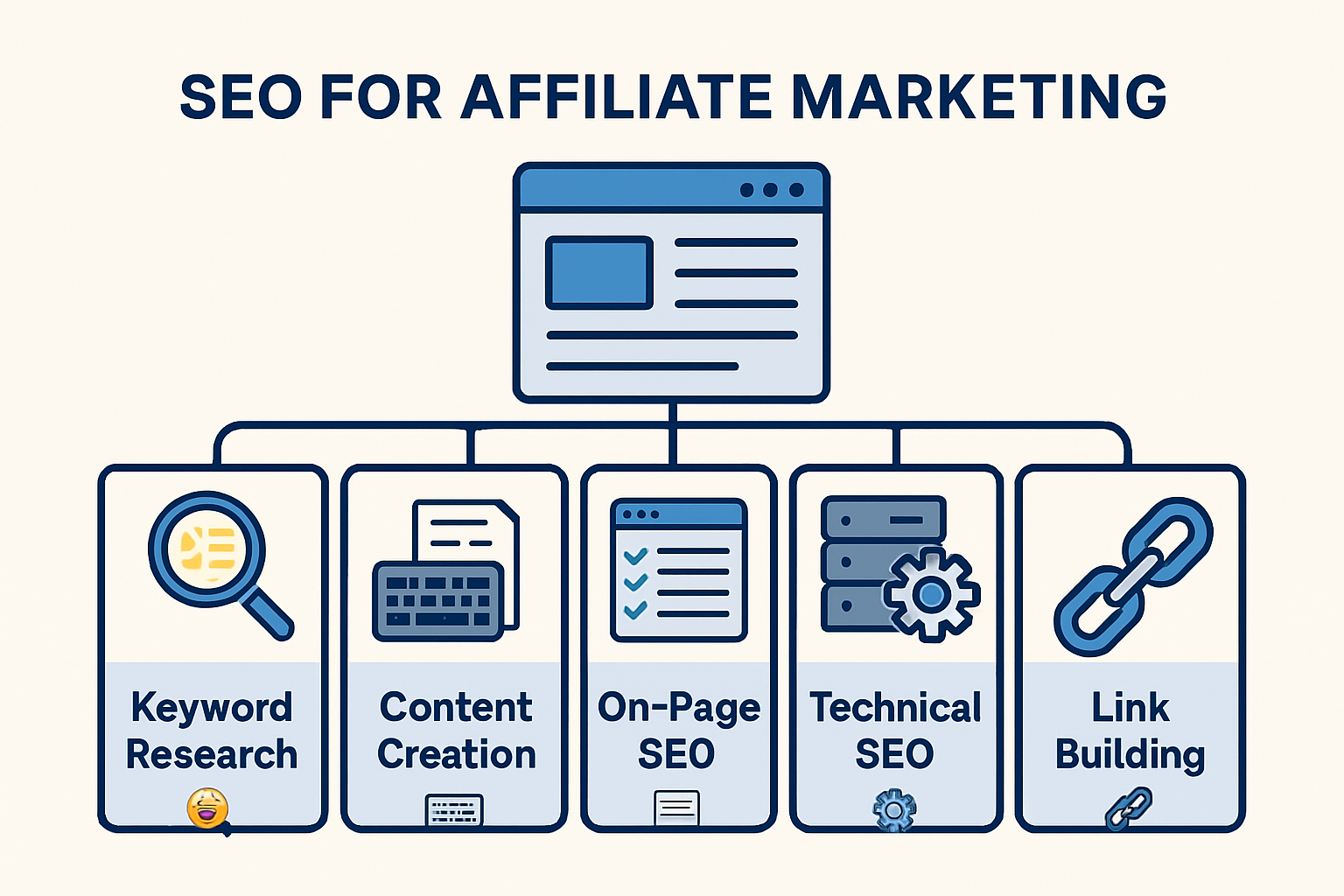
When I first started dabbling in online ventures, I made the classic mistake of focusing solely on getting products in front of people. I thought if I just linked to enough things, something would stick. What I quickly learned was that without a strong foundation, all my efforts were like building a house on sand. For a new affiliate marketing website, establishing core SEO principles from day one is non-negotiable. This section of our affiliate marketing SEO guide focuses on these crucial starting points.
Understanding the SEO Landscape in 2025
The world of SEO is constantly evolving. What worked effectively five years ago might be less impactful today, and what’s cutting-edge now could be standard practice tomorrow. In 2025, search engines, particularly Google, are increasingly sophisticated. They prioritize user experience, content quality, and genuine authority above all else. This means:
- User Intent is Paramount: Understanding why someone is searching for something is more important than ever. Are they looking to learn, compare, or buy?
- E-A-T (Expertise, Authoritativeness, Trustworthiness): These principles are crucial, especially for affiliate sites recommending products or services. Google wants to ensure users are getting information from credible sources [1].
- Mobile-First Indexing: Your site must be mobile-friendly. A significant portion of searches happen on mobile devices, and Google primarily uses the mobile version of your content for indexing and ranking.
- Core Web Vitals: These metrics (Loading, Interactivity, Visual Stability) are Google’s way of measuring user experience. A fast, responsive, and stable site is rewarded.
Technical SEO: The Unseen Backbone
Before you even write your first review, ensure your website’s technical foundation is solid. Think of it as ensuring the plumbing and electricity work perfectly before you decorate a house.
- Choose a Reliable Hosting Provider: Speed matters. A slow host will negatively impact your Core Web Vitals and user experience. I once chose a cheap host for a side project and spent more time troubleshooting than writing. Never again!
- Use HTTPS: This is a non-negotiable security requirement and a minor ranking factor. Most reputable hosting providers and platforms like WordPress offer easy ways to implement SSL certificates.
- Optimize Site Structure: A logical, easy-to-navigate site structure helps both users and search engines.
- Hierarchical Structure:
Home > Category > Subcategory > Product Review. - Breadcrumbs: Implement breadcrumbs to show users their path and provide internal linking opportunities.
- Hierarchical Structure:
- Create an XML Sitemap: This file lists all the important pages on your website, helping search engines discover and crawl your content efficiently. Submit it to Google Search Console.
- Set Up Google Search Console and Google Analytics: These free tools are indispensable. Search Console shows you how Google sees your site, crawl errors, search queries, and more. Analytics tracks user behavior, traffic sources, and conversions. You can’t improve what you don’t measure!
- Implement Schema Markup (Structured Data): This tells search engines exactly what your content is about. For an affiliate site, this could include schema for:
- Product reviews (
RevieworProductschema) - How-to guides (
HowToschema) - FAQs (
FAQPageschema)
Structured data can help you earn rich snippets in search results, making your listings stand out.
- Product reviews (
“A beautiful website with poor technical SEO is like a luxury car with no engine. It looks great, but it won’t go anywhere.”
On-Page SEO: Optimizing Your Content for Search Engines
Once your technical foundation is laid, it’s time to focus on the elements users and search engines see directly on your pages.
- Title Tags: Your page title (what appears in the browser tab and search results) should be compelling and include your primary keyword naturally. Keep it concise, ideally under 60 characters.
- Meta Descriptions: While not a direct ranking factor, a well-crafted meta description encourages clicks. Summarize the page’s content, include your primary keyword, and offer a clear call to action. Aim for 150-160 characters.
- Header Tags (H1, H2, H3, etc.): Structure your content with clear headings. Your H1 should contain your primary keyword, and H2s and H3s should break down your content into digestible sections, often incorporating secondary keywords or semantic variations. This makes your content scannable and improves readability.
- URL Structure: Keep your URLs short, descriptive, and keyword-rich. For example,
golisguide.com/best-coffee-makers-2025is far better thangolisguide.com/productid=12345. - Image Optimization:
- File Size: Compress images to reduce page load times.
- Alt Text: Provide descriptive alt text for all images. This helps search engines understand the image content and is crucial for accessibility. Include keywords where natural.
- Internal Linking: Link relevant pages within your own site. This helps distribute “link equity” (PageRank) and guides users to more related content, improving engagement. For instance, if you’re writing about choosing the best affiliate programs, you might link to an article like Top Affiliate Marketing Programs in 2025. This not only enhances user experience but also signals to search engines the relationship between your pages.
Remember, the goal of on-page SEO is to make your content easy for both users and search engines to understand and consume.
Mastering Keyword Research: The Compass for Your Affiliate Marketing SEO Guide
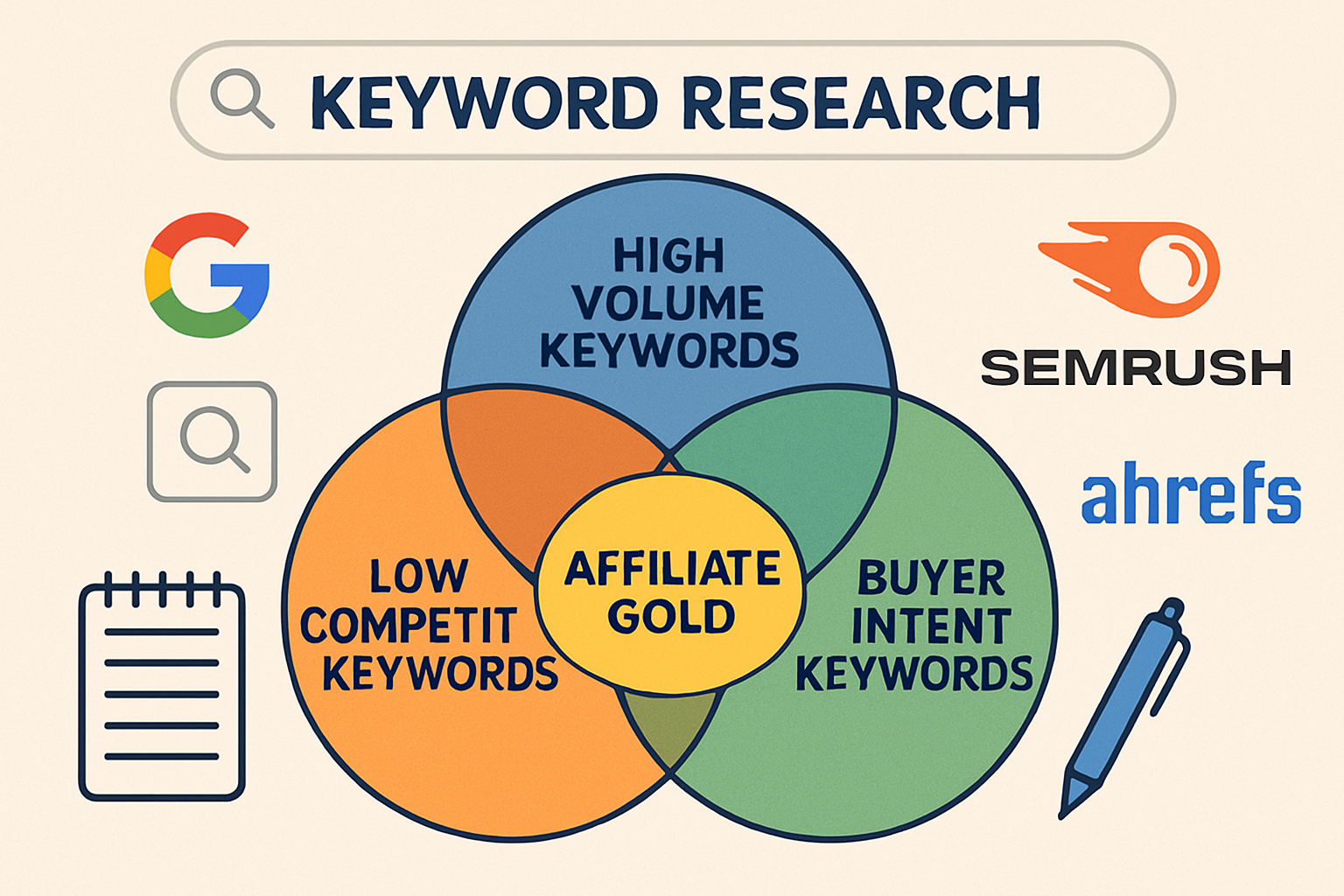
Keyword research is the cornerstone of any successful SEO strategy, especially for new affiliate websites. It’s not just about finding popular words; it’s about uncovering the precise language your target audience uses when searching for solutions, products, or information that you can provide. This phase of our affiliate marketing SEO guide is where you truly connect with your potential customers.
Understanding User Intent: The Heart of Keyword Research
In 2025, search engines are incredibly adept at understanding the intent behind a search query. Your job is to align your content with that intent.
There are generally four types of search intent:
- Informational: Users want to learn something (“how does affiliate marketing work?”).
- Navigational: Users want to go to a specific website (“Amazon Associates login”).
- Commercial Investigation: Users are researching a product or service before buying (“best VPN services review 2025”). This is a sweet spot for affiliate marketers.
- Transactional: Users are ready to buy (“buy noise-cancelling headphones”). Another prime target for affiliate links.
For affiliate marketing, you’ll often focus on commercial investigation and transactional keywords. These are the users closest to making a purchase decision.
Identifying High-Value Keywords
Here’s my step-by-step process for finding keywords that matter:
- Brainstorm Seed Keywords: Start broad. What is your niche? What problems do you solve? What products do you promote?
- Example: If your niche is “home coffee brewing,” seed keywords might be “coffee maker,” “espresso machine,” “coffee grinder.”
- Leverage Keyword Research Tools: These tools are your best friends.
- Google Keyword Planner (Free): Great for generating ideas and getting search volume estimates.
- SEMrush, Ahrefs, Ubersuggest (Paid, but with free trials/versions): Offer in-depth analysis, competitor insights, keyword difficulty scores, and long-tail keyword suggestions.
- AnswerThePublic (Free/Paid): Visualizes questions, prepositions, comparisons, and alphabetical searches related to your seed keyword, revealing user questions directly.
- Analyze Competitors: See what keywords established affiliate sites in your niche are ranking for. If they’re successful, there’s a good chance those keywords are valuable. Tools like SEMrush allow you to plug in a competitor’s domain and see their top-performing keywords.
- Focus on Long-Tail Keywords: These are longer, more specific phrases (e.g., “best budget espresso machine for beginners 2025”). They typically have lower search volume but much higher conversion rates because they indicate a specific user intent. They also tend to have lower competition, making it easier for new sites to rank.
- Anecdote: I once tried to rank for “best blenders” on a new site and got nowhere. When I shifted to “best personal blenders for smoothies on the go,” I started seeing traffic and sales within weeks. Specificity wins!
- Look for “Buyer Intent” Keywords: These are keywords that signal a user is close to making a purchase.
- “best [product] reviews”
- “[product name] vs [product name]”
- “[product] alternatives”
- “cheap [product]” / “affordable [product]”
- “[product] deals” / “[product] discount”
- “top 10 [product]”
- “where to buy [product]”
- Consider Keyword Difficulty: Some keywords are highly competitive. As a new website, aim for keywords with lower difficulty scores initially. You can target higher-difficulty keywords as your site gains authority.
Organizing Your Keywords
Once you have a list, organize them into clusters or themes. Each cluster can form the basis of a piece of content. For example:
| Keyword Cluster | Primary Keyword (H1 Focus) | Secondary Keywords (H2/H3/Body) | Intent Type |
|---|---|---|---|
| Coffee Makers | Best Coffee Makers for Home 2025 | Drip coffee makers, pour-over coffee makers, single-serve coffee machines, automatic coffee makers | Commercial Investigation |
| Espresso Machines | Top Espresso Machines for Beginners | Manual espresso machines, semi-automatic espresso makers, budget espresso machines, espresso maker reviews | Commercial Investigation |
| Affiliate Marketing | Affiliate Marketing for Beginners 2025 | How to start affiliate marketing, affiliate networks, make money online | Informational / Commercial |
This structured approach ensures that every piece of content you create is purposeful and optimized for specific search queries. By meticulously researching and targeting the right keywords, you’re building a roadmap for your content that leads directly to your ideal audience.
Creating High-Quality, SEO-Optimized Content for Conversions
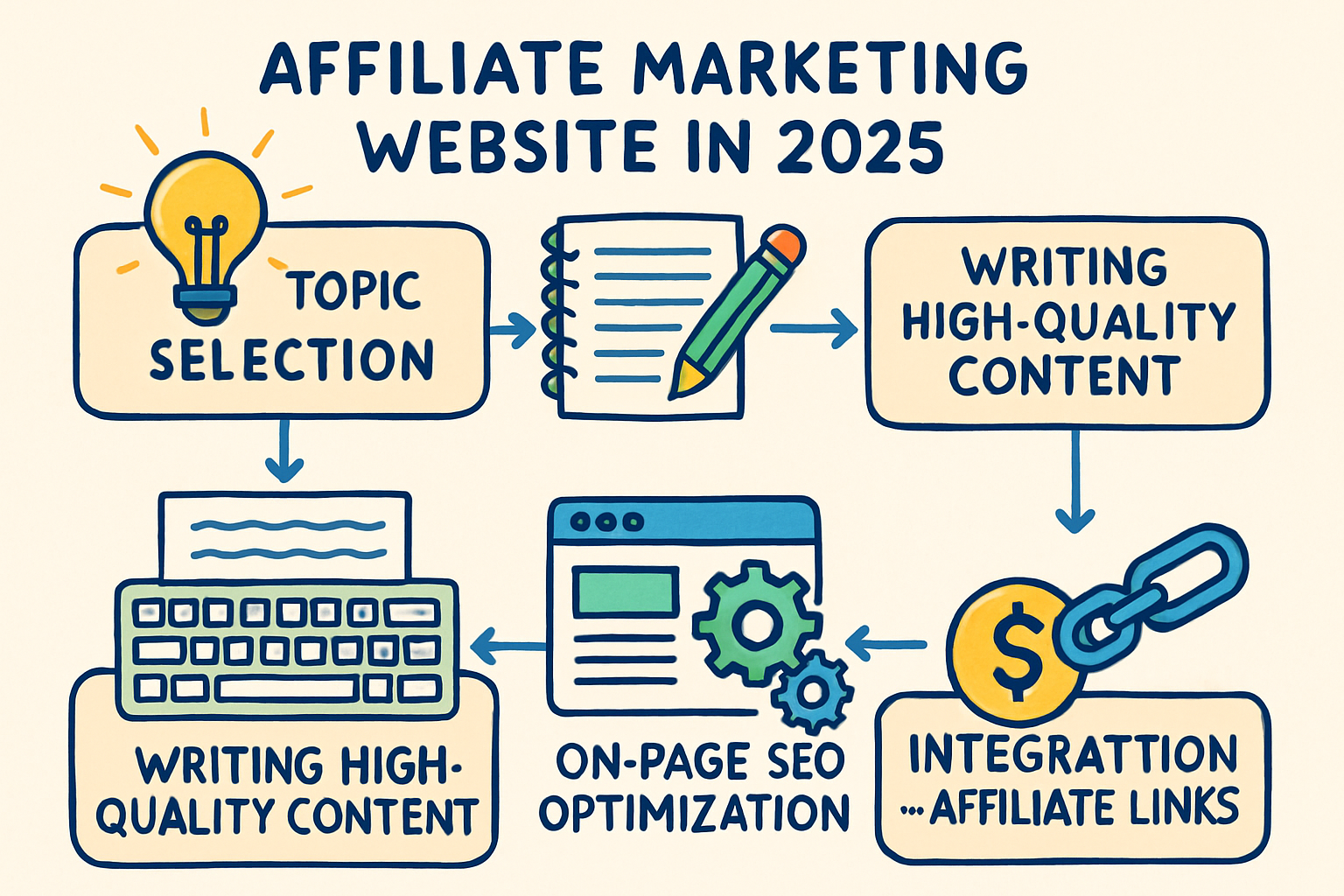
With your SEO foundation set and keyword research complete, the next critical step is to create content that not only ranks well but also genuinely helps your audience and drives conversions. This is where your affiliate marketing SEO guide truly comes to life. Forget about keyword stuffing; in 2025, quality, relevance, and user experience are paramount.
What Makes “High-Quality” Content?
Google’s algorithms are increasingly sophisticated, rewarding content that is:
- Comprehensive: Covers a topic thoroughly, leaving no stone unturned.
- Authoritative: Demonstrates expertise and provides accurate, well-researched information.
- User-Centric: Answers user questions, solves problems, and is easy to read and navigate.
- Original: Offers a unique perspective or adds value beyond what’s already out there.
- Engaging: Keeps users on the page, encouraging them to consume more content.
Types of Content for Affiliate Marketing
As an affiliate marketer, you’ll primarily focus on content types that lend themselves well to product recommendations and comparisons:
- Product Reviews: In-depth analyses of specific products.
- Example: “My Honest Review of the XYZ Coffee Maker (2025)”
- Tip: Include pros, cons, features, who it’s for, and personal experience if possible.
- “Best Of” Lists / Comparison Articles: Curated lists of top products in a category.
- Example: “The 10 Best Stand Mixers for Bakers in 2025” or “Ninja Foodi vs Instant Pot: Which Multi-Cooker is Right For You?”
- Tip: Create a comparison table and clearly state your criteria for selection.
- How-To Guides / Tutorials: Solve a problem or teach a skill, naturally integrating relevant products.
- Example: “How to Brew the Perfect Pour-Over Coffee at Home” (with links to specific coffee grinders, kettles, beans).
- Informational Articles: Provide value and build trust without directly selling.
- Example: “Understanding Coffee Bean Roast Levels” (can link to coffee subscription services).
- Case Studies / Success Stories: Show how a product helped someone achieve a goal.
- Tip: Be genuine and transparent.
Crafting Content for SEO and Conversions
Here’s how to create content that satisfies both search engines and your readers:
- Outline Before You Write: Before typing a single word, create a detailed outline.
- Start with your H1 (primary keyword).
- Break down the topic into logical sections (H2s).
- List sub-points for each section (H3s).
- Note where to include your target keywords, semantic variations, and internal/external links.
- Personal Story: Early in my career, I’d just start writing, hoping for the best. The result? Disjointed, rambling articles that ranked poorly. Outlining forced structure and clarity, and my rankings improved dramatically.
- Write Compelling Introductions: Hook your readers immediately. State the problem, promise a solution, and explain what they’ll gain from reading.
- Prioritize Readability:
- Short Paragraphs: Break up large blocks of text.
- Subheadings: Use H2s and H3s generously.
- Bullet Points & Numbered Lists: Excellent for breaking down complex information or presenting features/benefits.
- Bold Text: Highlight key phrases or takeaways.
- Concise Language: Avoid jargon where possible. Aim for that 7th-grade readability level.
- Integrate Keywords Naturally: Your primary keyword (e.g., “affiliate marketing SEO guide”) should appear in your:
- Title tag
- Meta description
- H1 heading
- First paragraph
- At least 2-3 H2/H3 headings (if natural)
- Body text (spread throughout)
Also, use semantic variations and LSI keywords. Instead of repeating “coffee maker” endlessly, use “espresso machine,” “brewer,” “coffee brewing device,” etc.
- Strategic Affiliate Link Placement:
- Above the Fold: For “best of” lists, place a link to the #1 recommendation early.
- Contextual Links: Weave links naturally within your content where they make sense. Don’t just dump a block of links at the end.
- Call-to-Action Buttons: “Check Price on Amazon,” “Shop Now,” “Learn More.” These often convert better than plain text links.
- Transparency: Always disclose your affiliate relationships clearly. This is a legal and ethical requirement, and it builds trust.
- Include High-Quality Visuals: Images, videos, infographics, and comparison tables break up text, illustrate points, and improve engagement. Remember to optimize images for speed and add alt text.
- Optimize for Featured Snippets: Answer common questions directly and concisely in your content. Using an FAQ section with schema markup can help you appear in “People Also Ask” boxes and featured snippets.
- Encourage Engagement: Ask questions, invite comments, and provide a clear path for users to learn more (e.g., linking to your blog).
Building Authority and Earning Trust: The Long-Term SEO Strategy
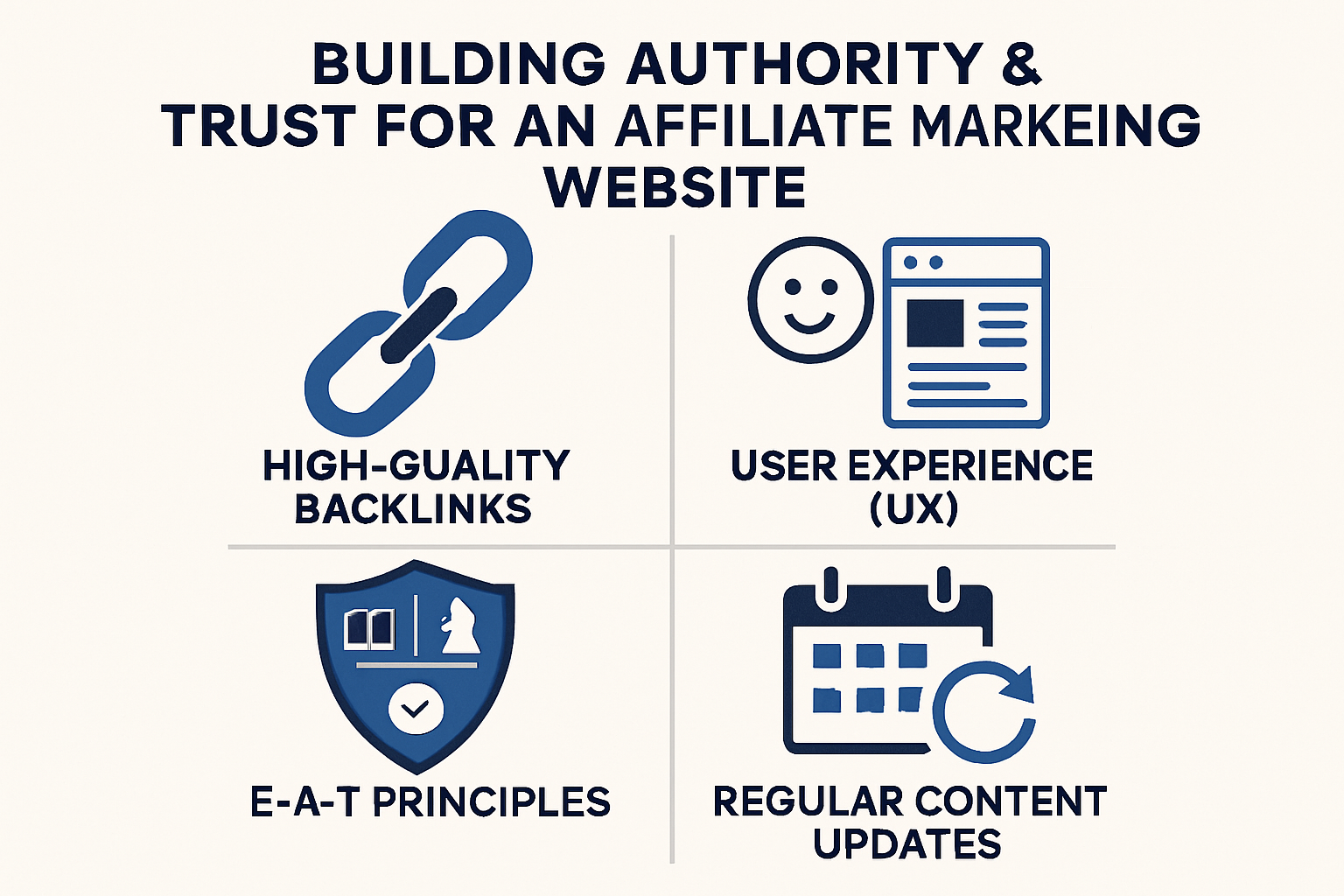
For new websites, establishing authority and trustworthiness is perhaps the most challenging, yet most rewarding, aspect of SEO. Google wants to rank sites that are recognized as experts in their field and that users can trust. This final pillar of our affiliate marketing SEO guide focuses on the strategies that will build your site into a reputable source.
The Power of Backlinks: Earning Votes of Confidence
Backlinks (links from other websites to yours) are still a fundamental ranking factor. Google views them as “votes of confidence” – if other reputable sites are linking to you, your content must be valuable. However, not all backlinks are created equal.
- Quality Over Quantity: One backlink from a highly authoritative, relevant site is worth a hundred from spammy, low-quality sites. Focus on earning links from sites within your niche or related industries.
- Natural Link Building: Avoid black-hat tactics like buying links or participating in link schemes. Google is very good at detecting these, and they can lead to severe penalties.
- Strategies for Earning Backlinks:
- Create Link-Worthy Content: This is the easiest and most sustainable method. Produce exceptional, unique content that others want to link to. This could be:
- Original research or data.
- Comprehensive guides (like this affiliate marketing SEO guide).
- Detailed infographics.
- Unique tools or calculators.
- Guest Posting: Offer to write high-quality articles for other reputable blogs in your niche. In return, you usually get an author bio with a link back to your site.
- Broken Link Building: Find broken links on other websites. Reach out to the webmaster and suggest replacing the broken link with a link to your relevant content.
- Skyscraper Technique: Find popular content in your niche, create something significantly better and more comprehensive, and then reach out to sites that linked to the original content, suggesting they link to yours instead.
- Resource Page Link Building: Identify websites with “resource pages” (lists of useful links). If your content is genuinely helpful, suggest it as an addition.
- HARO (Help A Reporter Out): Respond to journalist queries that relate to your expertise. If your quote is used, you often get a backlink from a high-authority news site.
- Social Media Promotion: While social shares aren’t direct ranking factors, they increase visibility, which can lead to more backlinks naturally. Share your content widely on platforms where your audience hangs out.
- Create Link-Worthy Content: This is the easiest and most sustainable method. Produce exceptional, unique content that others want to link to. This could be:
E-A-T: Demonstrating Expertise, Authoritativeness, and Trustworthiness
Google explicitly states that E-A-T is crucial for “Your Money or Your Life” (YMYL) topics, which include health, finance, and shopping [2]. Since affiliate marketing often involves recommendations that impact purchasing decisions, E-A-T is vital.
- Expertise: Show you know your stuff.
- In-depth Content: Create comprehensive articles that demonstrate deep knowledge.
- Author Bios: Feature detailed author bios for your content creators, highlighting their qualifications or experience. If you are the expert, share your journey! For example, on a site like GolisGuide.com, an “About Us” page detailing the expertise of its creators builds immediate trust.
- Authoritativeness: Establish yourself as a go-to source.
- Backlinks: As discussed, quality backlinks signal authority.
- Mentions/Citations: Get mentioned or cited by other authoritative sources (even without a direct link).
- Community Engagement: Participate in forums, social media groups, and industry discussions related to your niche.
- Trustworthiness: Build confidence with your audience and search engines.
- Transparency: Clearly disclose affiliate relationships.
- Security (HTTPS): Ensure your site is secure.
- Contact Information: Provide clear ways for users to contact you (contact page).
- Privacy Policy & Disclaimer Pages: Essential legal pages that build trust (privacy policy, disclaimer).
- User Reviews/Testimonials: If applicable, showcase positive feedback.
- Accuracy: Always provide factual and accurate information.
User Experience (UX) and Engagement
Google increasingly uses user signals to gauge content quality. A good user experience indicates valuable content.
- Site Speed: We discussed this under technical SEO, but it bears repeating. A fast site keeps users engaged.
- Mobile Responsiveness: Your site must look and function perfectly on all devices.
- Intuitive Navigation: Users should easily find what they’re looking for.
- Clear Calls to Action (CTAs): Guide users on what to do next.
- Minimizing Distractions: Avoid excessive pop-ups or intrusive ads.
- Freshness: Regularly update your content to ensure it remains accurate and relevant. For instance, a guide on Amazon Affiliate Marketing in 2025 will need periodic review to stay current with program changes.
By consistently focusing on these elements – earning quality backlinks, demonstrating E-A-T, and providing an excellent user experience – your new affiliate website will steadily build the authority and trust necessary to thrive in 2025 and beyond.
🔍 Affiliate Keyword Intent Selector
Use this tool to better understand the intent behind common affiliate marketing keyword types and how to target them with your content. Select a keyword type to see its intent and suggested content strategy.
Select a keyword type above to see its associated user intent and a recommended content strategy for your affiliate site.
Conclusion: Your Path to Affiliate Marketing SEO Success in 2025
Embarking on the journey of affiliate marketing with a new website can feel overwhelming, but by systematically applying the principles of this affiliate marketing SEO guide, you’re setting yourself up for sustainable growth and success in 2025. Remember, SEO is not a one-time task; it’s an ongoing commitment to providing value, earning trust, and adapting to the ever-changing digital landscape.
My own experience has taught me that patience and persistence are your greatest allies. I’ve launched sites that seemed to crawl in search rankings for months, only to see them surge after consistent effort in content creation and link building. The key is to focus on genuine value for your audience first, and the search engines will follow.
Here are your actionable next steps:
- Audit Your Foundation: If you haven’t already, review your site’s technical SEO (hosting, HTTPS, sitemap, mobile-friendliness). Ensure Google Search Console and Analytics are properly set up.
- Deep Dive into Keywords: Continuously research and refine your target keywords, always prioritizing user intent. Look for those commercial investigation and transactional gems!
- Prioritize Content Creation: Develop a content calendar based on your keyword research. Focus on creating comprehensive, high-quality, and engaging content that genuinely helps your audience and naturally incorporates affiliate links.
- Build Authority Systematically: Start a proactive backlink acquisition strategy, focusing on high-quality, relevant links. Actively demonstrate E-A-T through author bios, transparency, and accurate information.
- Monitor, Analyze, and Adapt: Regularly check your rankings, traffic, and conversions using Google Search Console and Analytics. Pay attention to algorithm updates and be ready to tweak your strategies.
- Stay Updated: The world of SEO changes rapidly. Keep learning and stay informed about the latest trends and best practices. Resources like GolisGuide.com offer valuable insights into various aspects of affiliate marketing and SEO.
By consistently implementing these strategies, your new affiliate website won’t just survive; it will thrive, attracting organic traffic, building a loyal audience, and generating those valuable affiliate commissions for years to come. Your journey starts now.