

Imagine waking up, grabbing your favorite coffee, and checking your phone to see notifications of sales commissions rolling in, all while you were sleeping. This isn’t a pipe dream; it’s the reality for many successful owners of an affiliate marketing blog. In 2025, the digital landscape offers more opportunities than ever for individuals and businesses to leverage the power of content to drive sales and earn passive income. Whether you’re a seasoned marketer or just starting, understanding how to build, optimize, and monetize an affiliate marketing blog is a skill that can truly transform your financial future.
I’ve personally witnessed the incredible growth potential of well-executed affiliate strategies. My journey began years ago with a humble blog about sustainable living. I spent countless hours researching eco-friendly products, writing detailed reviews, and slowly, steadily, watching my traffic grow. The first affiliate commission I received – a meager few dollars for a bamboo toothbrush sale – felt like winning the lottery. It proved the concept, and from there, I meticulously applied the principles I’m about to share with you, turning that small blog into a consistent revenue stream. This article will serve as your definitive guide to creating and thriving with your own affiliate marketing blog in the current year.
Table of Contents
Key Takeaways
- Strategic Niche Selection is Paramount: Choosing the right niche for your affiliate marketing blog is the foundational step to attracting a targeted audience and finding relevant products.
- Content is King (and Cash): High-quality, valuable, and SEO-optimized content is the engine that drives traffic and encourages clicks on your affiliate links.
- SEO is Your Best Friend: Mastering search engine optimization is critical for ranking high in search results and ensuring a steady flow of organic traffic to your affiliate marketing blog.
- Diversify Monetization: While direct affiliate links are key, explore other income streams like sponsored posts, digital products, and email marketing to maximize profitability.
- Analyze and Adapt: Regularly monitor your performance, understand your audience, and be prepared to pivot your strategies to stay competitive and grow your affiliate marketing blog.
The Foundation: What is an Affiliate Marketing Blog and Why Start One in 2025?
At its core, an affiliate marketing blog is a website where you create content (articles, reviews, guides, comparisons) designed to inform, educate, or entertain your audience, and subtly (or not so subtly) recommend products or services from other companies. When a reader clicks on a unique affiliate link embedded in your content and makes a purchase, you earn a commission. It’s a performance-based marketing model where you, the affiliate, act as a bridge between consumers and merchants.
So, why is 2025 a prime time to launch an affiliate marketing blog? The digital commerce landscape continues its exponential growth. Consumers are increasingly turning to online reviews, independent blogs, and expert opinions before making purchasing decisions. They trust authentic voices more than traditional advertisements. This trend plays directly into the hands of an affiliate marketing blog owner who can provide genuine value, honest insights, and well-researched recommendations. Furthermore, the barriers to entry are lower than ever, with user-friendly platforms and abundant resources available to help you get started.
From a business perspective, an affiliate marketing blog offers numerous advantages:
- Low Startup Costs: Unlike e-commerce, you don’t need to manage inventory, shipping, or customer service. Your primary investments are time, web hosting, and a domain name.
- Flexibility and Freedom: You can work from anywhere, set your own hours, and dictate your own content strategy. It offers unparalleled lifestyle flexibility.
- Scalability: Once your processes are in place, you can scale your content output and explore new niches, significantly increasing your earning potential.
- Passive Income Potential: While it requires initial effort, well-optimized content can continue to generate commissions for months or even years after publication.
My own blog started as a passion project, something I worked on in the evenings after my full-time job. I remember the excitement of seeing my first few articles gain traction and, more importantly, convert readers into buyers. It wasn’t overnight success, but the consistent effort built momentum, proving that an affiliate marketing blog isn’t just a side hustle; it can be a legitimate, profitable business.
Crafting Your Niche: The Cornerstone of a Successful Affiliate Marketing Blog
Choosing the right niche is arguably the most critical decision you’ll make for your affiliate marketing blog. It dictates your audience, the products you’ll promote, and ultimately, your potential for success. A well-defined niche allows you to become an authority, attract highly targeted traffic, and stand out from the noise.
Think of it this way: would you rather be one of a million generic “money-making” blogs, or the go-to resource for “eco-friendly smart home gadgets for urban dwellers”? The latter immediately conveys expertise and speaks to a specific problem or desire.
How to Find Your Perfect Niche in 2025:
- Passion & Expertise: Start with what you genuinely love or have significant knowledge about. Your enthusiasm will shine through in your writing, making your content more engaging and trustworthy. If you’re passionate about a topic, you’ll be motivated to produce consistent, high-quality content for your affiliate marketing blog.
- Market Demand & Profitability:
- Keyword Research: Use tools like Google Keyword Planner, Ahrefs, or Semrush to identify topics with sufficient search volume but manageable competition. Look for long-tail keywords relevant to your potential niche.
- Affiliate Programs: Research existing affiliate programs related to your ideas. Are there plenty of products with good commission rates? Are the products reputable and in demand? Networks like ShareASale, CJ Affiliate, Amazon Associates, and ClickBank are great places to start exploring.
- Competitor Analysis: Who are your potential competitors? Analyze their content, their monetization strategies, and their audience engagement. Can you offer something better, different, or more focused?
- Audience Potential: Is there a specific audience segment within your niche that you can cater to? Understanding their pain points, desires, and demographics will help you create highly relevant content for your affiliate marketing blog.
- Evergreen vs. Trendy: While trendy niches can offer quick wins, evergreen topics (like personal finance, health, specific hobbies) provide long-term stability and consistent traffic to your affiliate marketing blog.
For example, when I considered expanding beyond general sustainable living, I noticed a growing interest in “zero-waste kitchen tools.” It was specific enough, had passionate consumers, and a wealth of products available through affiliate programs. This strategic narrowing of my focus allowed my affiliate marketing blog to dominate that particular sub-niche.
Pitfalls to Avoid:
- Too Broad: “Fitness” is too broad. “Fitness gear for busy parents” is better.
- Too Niche (No Demand): If only 100 people search for your topic globally per month, it might be too small.
- No Affiliate Products: A great niche with no products to promote means no income.
- Hyper-Competitive: Trying to outrank established giants in “travel booking” is an uphill battle for a new affiliate marketing blog.
Your niche is your unique selling proposition. Spend adequate time here, as it will inform every other decision you make for your affiliate marketing blog.
Building Your Platform: Essential Tools and Technologies for Your Affiliate Marketing Blog
Once your niche is defined, it’s time to set up the technical infrastructure for your affiliate marketing blog. Don’t let this intimidate you; modern tools make it incredibly straightforward, even for beginners.
1. Domain Name and Hosting: Your Digital Address and Home
- Domain Name: This is your website’s address (e.g.,
www.yourgreatblog.com). Choose something relevant to your niche, easy to remember, and preferably includes a keyword if possible (though exact match domains are less critical than they once were). I recommend keeping it concise and brandable. - Web Hosting: This is where your website’s files live on the internet. For an affiliate marketing blog, reliability, speed, and good customer support are crucial.
- Recommendations:
- Bluehost/Hostinger/SiteGround: Excellent for beginners, good balance of features and price.
- WP Engine/Kinsta: Premium managed WordPress hosting, ideal for growing blogs that need speed and robust support.
- Recommendations:
2. Content Management System (CMS): WordPress is King
For an affiliate marketing blog, WordPress (specifically WordPress.org, the self-hosted version) is the undisputed champion. It’s free, open-source, incredibly flexible, and powers over 40% of all websites on the internet.
- Why WordPress?
- SEO-Friendly: Built with SEO in mind, and powerful plugins enhance its capabilities.
- Customization: Thousands of themes and plugins allow you to customize your site’s look and functionality without coding.
- Community Support: A massive global community means help is always available.
- Scalability: Grows with your affiliate marketing blog, from a small personal site to a large authority platform.
3. Essential WordPress Plugins for Your Affiliate Marketing Blog
Plugins extend the functionality of your WordPress site. Here are some must-haves:
- Yoast SEO/Rank Math: Critical for on-page SEO. Helps you optimize titles, meta descriptions, content, and provides readability analysis.
- Classic Editor (Optional): If you prefer the old WordPress editor over the new block editor (Gutenberg).
- LiteSpeed Cache/WP Rocket: Improves website speed and performance, crucial for user experience and SEO.
- Akismet Anti-Spam: Protects your comment section from spam.
- Pretty Links/ThirstyAffiliates: Essential for managing your affiliate links. These plugins allow you to “cloak” ugly affiliate links (e.g.,
yoursite.com/recommends/product-nameinstead of a long, tracking-filled URL) and track clicks. This is vital for maintaining a professional look for your affiliate marketing blog. - WPForms/Fluent Forms: For creating contact forms, email opt-in forms, and surveys.
- UpdraftPlus: For automated website backups, saving you from potential disaster.
I learned the hard way about backups when my first blog was almost wiped out by a hosting issue. A good backup plugin became a non-negotiable part of my toolkit for every affiliate marketing blog I’ve built since.
4. Email Marketing Service: Building Your Audience
Beyond your blog, an email list is one of your most valuable assets. It allows you to communicate directly with your audience, promote new content, and offer exclusive affiliate deals.
- Recommendations:
- MailerLite: Great for beginners, offers a generous free plan.
- ConvertKit: Popular among content creators and bloggers, user-friendly.
- ActiveCampaign: More advanced automation capabilities for scaling.
Setting up your affiliate marketing blog’s infrastructure correctly from the start will save you headaches down the line and provide a solid foundation for growth.
Content is King: Creating High-Quality, Conversational Content for Your Affiliate Marketing Blog
This is where the magic happens. Your content is the bridge between your audience’s needs and the solutions offered by the products you promote. For an affiliate marketing blog, content isn’t just about information; it’s about trust, relevance, and persuasion.
Understanding Your Audience and Their Intent
Before you write a single word, step into your audience’s shoes. What are their problems? What questions do they have? What do they want to achieve? Different search queries reveal different user intent:
- Informational: “What is sustainable fashion?” (They want to learn.)
- Navigational: “Amazon.com” (They want to go to a specific site.)
- Transactional: “Buy eco-friendly running shoes” (They want to purchase.)
- Commercial Investigation: “Best eco-friendly running shoes review 2025” (They are researching before buying.)
Your affiliate marketing blog content will primarily target commercial investigation and informational intent, guiding users toward solutions.
Types of Content for an Affiliate Marketing Blog:
- Product Reviews (Individual): Detailed, honest reviews of single products. Focus on features, pros, cons, who it’s for, and real-world experience. Use your own photos/videos if possible.
- Anecdote: My review of a specific water filter system, where I detailed its installation process and taste tests over several months, consistently outperforms generic reviews because of its personal touch.
- Comparison Articles (“X vs. Y”, “Best X for Y”): Help readers choose between similar products. E.g., “Air Fryer A vs. Air Fryer B” or “Best Air Fryers for Small Apartments.” Create comparison tables for easy digestion.
- Roundup Posts (“Top 10 X for Y”): Curated lists of recommended products within a category. E.g., “10 Best Organic Coffee Brands of 2025.”
- How-To Guides/Tutorials: Show readers how to use a product or achieve a goal. E.g., “How to Set Up Your Smart Home Security System.” You can naturally weave in affiliate product recommendations.
- Problem/Solution Posts: Address a common problem and offer affiliate products as solutions. E.g., “Tired of Slow Internet? These Mesh WiFi Systems Can Help.”
- Resource Lists: Compile a list of useful tools, software, or services. E.g., “My Essential Tools for Blogging in 2025.”
Principles of High-Quality Content:
- Originality & Value: Don’t just regurgitate product descriptions. Add your unique insights, test results, and personal experiences. Provide real value that genuinely helps the reader.
- Thoroughness: Cover the topic comprehensively. Answer common questions, address potential concerns. Aim to be the definitive guide on the subject.
- Readability: Use short paragraphs, clear headings (H2, H3), bullet points, and bold text. Break up large blocks of text. Aim for a 7th-grade reading level.
- Visuals: Incorporate high-quality images, screenshots, infographics, and videos. Visuals improve engagement and explain complex concepts.
- Call to Action (CTA): Clearly guide your readers. Where should they click next? Use compelling language for your affiliate links (“Check Price on Amazon,” “Learn More Here,” “Get Your Free Trial”).
- Honesty & Transparency: Always disclose that you’re using affiliate links. It’s a legal requirement (FTC guidelines) and builds trust with your audience. Never recommend a product you don’t genuinely believe in. Your reputation is your most valuable asset for your affiliate marketing blog.
My commitment to honesty once led me to review a popular product critically, even though it had a high commission. I explained its flaws transparently. Surprisingly, that review still generated sales, not for the reviewed product, but for an alternative I recommended, because readers trusted my genuine assessment. Trust is truly the currency of an affiliate marketing blog.
SEO and Traffic Generation: Getting Eyes on Your Affiliate Marketing Blog
Even the most brilliant content won’t earn commissions if nobody sees it. Search Engine Optimization (SEO) is the process of optimizing your content to rank higher in search engine results, driving organic, free traffic to your affiliate marketing blog.
Keyword Research: The Cornerstone of SEO
Effective keyword research is non-negotiable. It’s how you discover what your audience is searching for.
- Brainstorm Seed Keywords: Start with broad terms related to your niche (e.g., “coffee maker,” “running shoes”).
- Expand with Keyword Tools: Use tools like Ahrefs, Semrush, Ubersuggest, or even Google’s “People Also Ask” and “Related Searches” to find long-tail keywords. Long-tail keywords (e.g., “best budget espresso machine for beginners”) are longer, more specific, and often have lower competition but higher conversion rates.
- Analyze Search Intent: As discussed, understand why someone is searching for that keyword.
- Assess Competition: Look at the websites already ranking for your target keywords. Can you realistically outrank them?
On-Page SEO Best Practices for Your Affiliate Marketing Blog:
- Title Tag (H1): Include your primary keyword naturally and make it compelling (50-60 characters).
- Meta Description: A brief, enticing summary of your content (150-160 characters) that includes your keyword.
- URL Structure: Keep URLs short, descriptive, and include your main keyword.
- Headings (H2, H3, H4): Use headings to break up content and include variations of your keyword. This improves readability and signals topic relevance to search engines. Ensure your “affiliate marketing blog” keyword appears naturally in some subheadings.
- Content Quality: As already covered, this is paramount. Google prioritizes high-quality, relevant, and comprehensive content.
- Keyword Placement: Include your primary keyword and semantic variations naturally throughout your article, especially in the introduction, body, and conclusion. Do not stuff keywords.
- Internal Linking: Link to other relevant articles within your affiliate marketing blog. This helps readers stay on your site longer and passes “link juice” around your content.
- External Linking: Link to reputable, authoritative sources to back up claims or provide additional information.
- Image Optimization: Use descriptive alt text for images (including keywords) and compress images for faster loading.
- Mobile-Friendliness: Ensure your affiliate marketing blog is responsive and looks great on all devices. Google prioritizes mobile-first indexing.
Technical SEO for Your Affiliate Marketing Blog:
- Website Speed: Optimize images, use caching plugins, and choose good hosting. A slow site frustrates users and hurts rankings.
- SSL Certificate: Essential for security (
https://). Most good hosts provide this for free. - Schema Markup: Helps search engines understand your content better (e.g., review schema for product reviews).
Beyond SEO: Other Traffic Sources:
While SEO is foundational for a long-term affiliate marketing blog, consider diversifying:
- Social Media: Share your content on platforms relevant to your niche (Pinterest for visual niches, Facebook groups, Instagram, X).
- Email Marketing: Promote new posts and exclusive offers to your subscribers.
- Paid Ads: Consider Google Ads or social media ads for specific, high-value campaigns, especially once you understand your conversion rates.
- Guest Posting: Write articles for other blogs in your niche, linking back to your affiliate marketing blog.
- Forums & Communities: Participate in relevant online communities, offering value and subtly directing people to your content when appropriate (avoid spamming!).
One of my biggest traffic boosts came when a respected industry leader shared one of my articles on Twitter. It wasn’t direct SEO, but it amplified my content significantly, leading to more backlinks and ultimately, higher organic rankings for my affiliate marketing blog. Never underestimate the power of a strong piece of content finding its way to the right influencer.
Monetization Strategies: Beyond Direct Affiliate Links for Your Affiliate Marketing Blog
While embedding affiliate links is the primary way an affiliate marketing blog earns income, smart bloggers diversify their monetization strategies to build a more resilient and profitable business.
1. Direct Affiliate Links
This is your bread and butter. Strategically place your unique affiliate links within your content, ensuring they feel natural and provide value to the reader.
- Contextual Links: Hyperlink relevant keywords or phrases within your text.
- Button CTAs: Use clear, compelling buttons for high-impact calls to action (e.g., “Shop Now,” “Get the Best Price”).
- Product Boxes/Comparison Tables: Visually appealing elements that showcase products and their links.
- Image Links: Link images of products directly to their affiliate pages.
2. Display Advertising
Once your affiliate marketing blog reaches a decent level of traffic (e.g., 20,000-50,000 sessions per month), you can apply to ad networks like Mediavine or AdThrive. These networks place programmatic ads on your site, earning you revenue based on impressions (how many times ads are viewed) or clicks.
- Pros: Passive income, no direct selling required.
- Cons: Can slightly impact user experience and site speed; income is directly tied to traffic volume.
3. Selling Your Own Digital Products
This is a powerful way to increase your profit margins significantly. If you have deep expertise in your niche, consider creating:
- E-books/Guides: Comprehensive resources that expand on your blog content.
- Online Courses: In-depth training programs (e.g., “Mastering Vegan Cooking”).
- Templates/Printables: Useful tools for your audience (e.g., budget planners, meal prep templates).
Selling your own products for your affiliate marketing blog allows you to capture 100% of the revenue, build your brand, and nurture a loyal audience. My own foray into digital products began with a simple “Zero-Waste Home Checklist” that turned out to be incredibly popular, eventually leading to a full e-book.
4. Sponsored Content
As your authority grows, brands may approach you for sponsored posts, product reviews, or social media mentions.
- Pros: High-paying, direct income, builds relationships with brands.
- Cons: Requires careful vetting to ensure authenticity and alignment with your audience’s trust. Always disclose sponsored content.
5. Email Marketing
Your email list isn’t just for sending new blog posts. You can send:
- Exclusive Deals: Promote affiliate products with special discounts to your subscribers.
- Product Launches: Announce new product reviews or resources on your affiliate marketing blog.
- Webinars/Workshops: Host events that promote affiliate products or your own digital products.
An often-overlooked strategy is to create a series of emails that nurture subscribers through a sales funnel, introducing them to various solutions (via affiliate links) over time.
6. Memberships/Subscriptions
If your affiliate marketing blog provides incredibly unique and valuable content (e.g., exclusive research, community access, premium tools), you might offer a paid membership model.
Diversifying income streams provides stability. If one affiliate program reduces commissions or a particular product becomes less popular, you have other revenue sources to fall back on. For a robust affiliate marketing blog, a multi-faceted approach to monetization is key.
Scaling and Growth Strategies for Your Affiliate Marketing Blog in 2025
Once your affiliate marketing blog is established and generating consistent income, the next step is to scale your efforts for greater reach and profitability. This involves strategic thinking and optimizing your workflows.
1. Content Expansion and Optimization
- Publish More: Increase your content output. This might mean hiring freelance writers or content assistants.
- Update Old Content: Regularly revisit and update your highest-performing articles. Refresh statistics, add new product recommendations, improve SEO, and enhance readability. This is often easier and more impactful than creating entirely new posts.
- Content Clusters & Topic Authority: Instead of individual posts, create “topic clusters” around pillar content. For instance, a pillar post on “Ultimate Guide to Smart Home Automation” could link to supporting articles like “Best Smart Thermostats,” “Smart Lighting Reviews,” and “Setting Up a Smart Security System.” This establishes your affiliate marketing blog as an authority on a broader subject.
- Repurpose Content: Turn blog posts into videos, podcasts, social media carousels, or email courses. Maximize the value of every piece of content you create.
2. Audience Engagement and Community Building
- Foster Comments: Respond to comments on your blog posts, creating a dialogue.
- Social Media Groups: Create a private Facebook group or Discord server for your most engaged readers. This builds a loyal community and allows for direct communication.
- Interactive Elements: Incorporate quizzes, polls, or surveys into your content to engage readers and gather valuable feedback. This helps you understand what new content your audience wants from your affiliate marketing blog.
3. Link Building: The Unsung Hero of SEO
While internal linking is within your control, earning backlinks from other reputable websites is crucial for improving your domain authority and search rankings.
- Guest Posting: Offer to write high-quality articles for other blogs in your niche, including a link back to your affiliate marketing blog.
- Broken Link Building: Find broken links on other websites and suggest your content as a replacement.
- Resource Pages: Reach out to sites with “resource” pages and suggest adding your valuable content.
- Digital PR: Create compelling, data-driven content that attracts media attention.
Link building is a long-term strategy, but it’s incredibly effective for boosting the authority of your affiliate marketing blog.
4. Conversion Rate Optimization (CRO)
Getting traffic is great, but getting sales is better. CRO focuses on improving the percentage of visitors who complete a desired action (e.g., click an affiliate link, sign up for your email list).
- A/B Testing: Test different headlines, calls to action, button colors, and content layouts to see what performs best.
- Heatmaps & Analytics: Use tools like Hotjar to understand how users interact with your pages. Where do they click? Where do they stop scrolling?
- Optimize Page Speed: Crucial for reducing bounce rates and improving user experience.
I once A/B tested two different call-to-action buttons on a high-traffic review post. One button was “Buy Now,” and the other was “Check Price on Amazon.” The latter, less aggressive option, led to a 15% increase in clicks and conversions. Small changes can have significant impacts on your affiliate marketing blog’s revenue.
5. Team Building & Outsourcing
As your affiliate marketing blog grows, you can’t do everything yourself. Consider outsourcing tasks:
- Content Writing: Hire freelance writers to scale your content production.
- SEO Specialist: Bring in an expert to refine your SEO strategy.
- Virtual Assistant: For administrative tasks, research, or social media management.
- Web Developer: For technical issues or custom site enhancements.
Building a team allows you to focus on high-level strategy and growth initiatives for your affiliate marketing blog, rather than getting bogged down in day-to-day operations.
Scaling an affiliate marketing blog is an iterative process. It requires constant learning, experimentation, and a willingness to adapt. Stay informed about industry trends, keep an eye on your analytics, and continuously strive to provide the best possible value to your audience.
Affiliate Niche Selector for Your 2025 Blog 🚀
Use this interactive tool to help identify a promising niche for your affiliate marketing blog. Answer a few questions about your interests and market potential.
1. Your Passion & Expertise
2. Market Potential & Profitability
This tool provides a general guide. Thorough research is always recommended before launching your affiliate marketing blog.
Conclusion: Your Journey to a Thriving Affiliate Marketing Blog in 2025
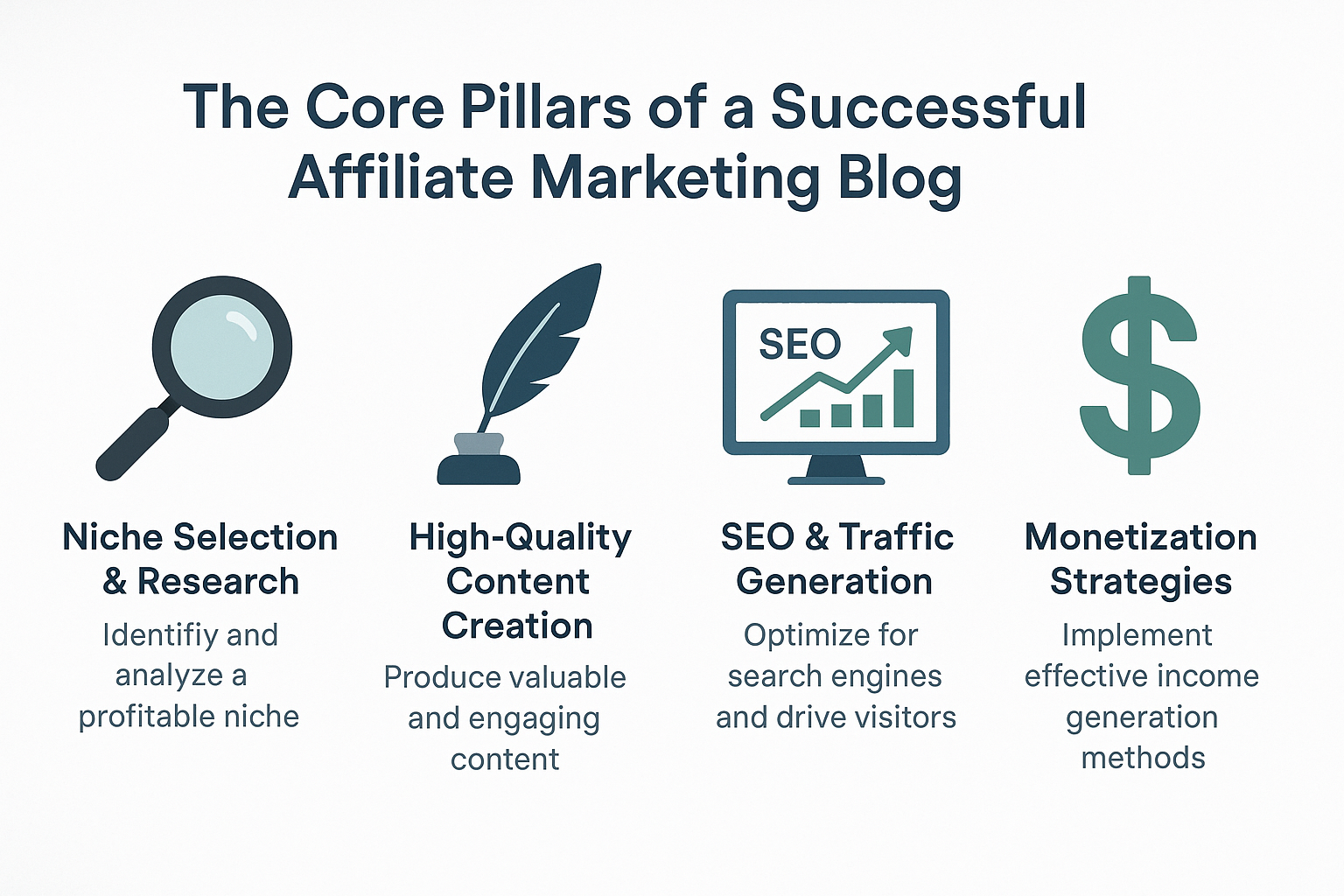
Embarking on the journey of creating an affiliate marketing blog in 2025 is an exciting and potentially life-changing endeavor. It’s a marathon, not a sprint, demanding dedication, continuous learning, and a genuine desire to provide value to your audience. We’ve covered the essential pillars: from strategically selecting your niche and setting up your robust WordPress platform, to crafting high-quality content that converts, mastering SEO for organic traffic, and diversifying your monetization strategies beyond simple links.
Remember the story of my bamboo toothbrush sale? It started small, but the belief in the process and consistent effort led to significant growth. Your affiliate marketing blog has the same potential. The digital landscape is ever-evolving, but the core principles of trust, authority, and value remain timeless.
Actionable Next Steps:
- Refine Your Niche: Spend dedicated time researching and validating your niche using the principles and tools discussed. Ensure it aligns with your passion, expertise, and market demand for an affiliate marketing blog.
- Build Your Foundation: Purchase your domain name, set up reliable web hosting, and install WordPress. Get familiar with essential plugins like an SEO tool and an affiliate link manager.
- Plan Your Content Strategy: Brainstorm at least 10-15 article ideas targeting commercial investigation keywords within your niche. Outline your first 3-5 posts with a focus on delivering immense value.
- Start Writing & Optimizing: Begin creating your high-quality content, paying close attention to SEO best practices, readability, and natural inclusion of affiliate links.
- Analyze and Adapt: Once your content is live, regularly check your analytics (Google Analytics, Google Search Console) to understand what’s working and what’s not. Be ready to iterate, update, and improve.
The world of affiliate marketing for your blog is rich with opportunity. By applying these strategies, staying persistent, and genuinely focusing on helping your audience, you’re not just building a website; you’re building a sustainable online business for 2025 and beyond. Good luck on your journey!