Voice Search Affiliate Marketing Guide for Beginners
Imagine you’re rushing through your morning routine, coffee in hand, and you ask your smart speaker, “Hey Google, what’s the best beginner guide to making money with affiliate links?” Instead of typing away on your phone, voice search delivers instant answers—and if your content isn’t optimized for it, you’re missing out on easy traffic that could turn into commissions. As someone who’s built affiliate sites from scratch and watched voice technology reshape how people discover products, I can tell you this: voice search isn’t just a trend; it’s a game-changer for beginners dipping into affiliate marketing. In 2026, with over 157 million Americans using voice assistants, optimizing for spoken queries means reaching audiences who are ready to buy without ever touching a keyboard. This guide walks you through the basics, showing how to blend voice search strategies with affiliate promotions to start earning without overwhelming tech hurdles.

Understanding Voice Search in Affiliate Marketing
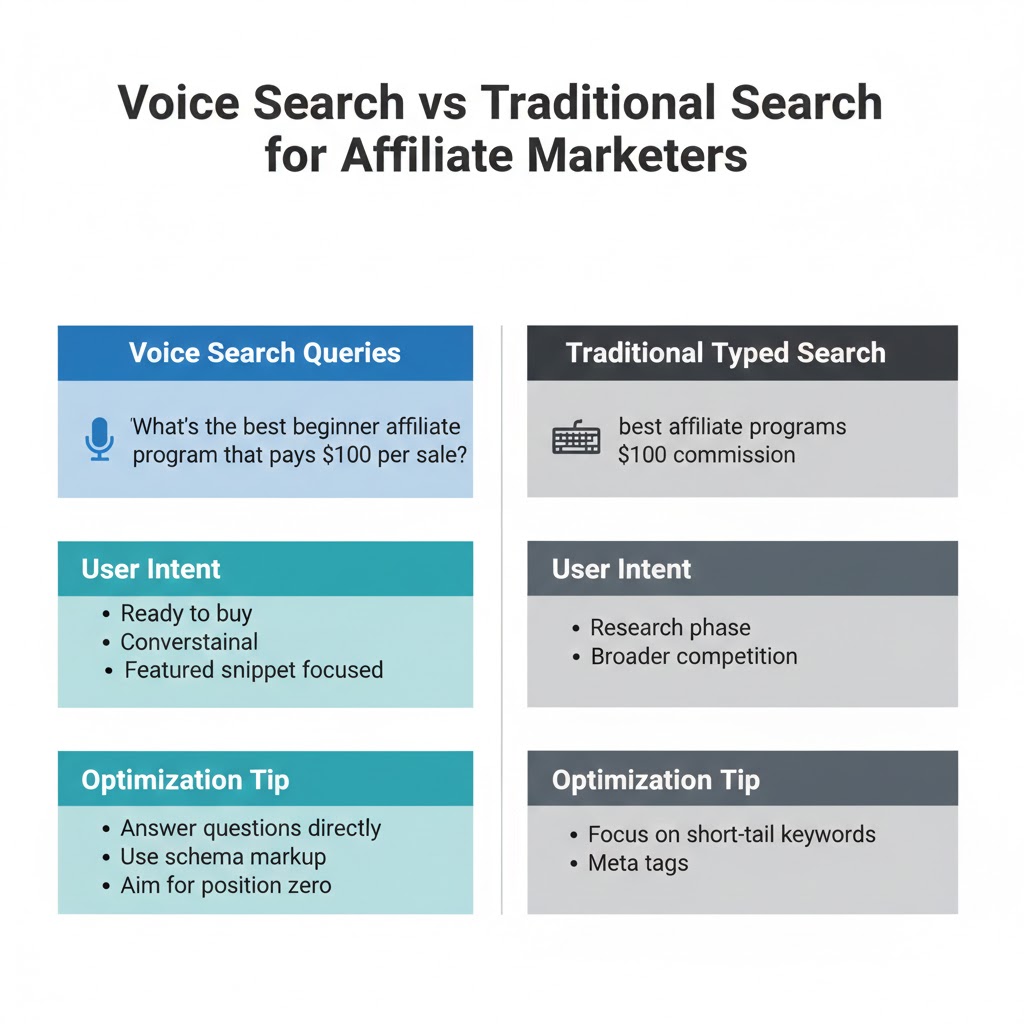
Voice search lets users speak queries to devices like Siri, Alexa, or Google Assistant, pulling up results based on natural conversation rather than typed keywords. For affiliate marketers, this shifts the focus from short, punchy search terms to longer, question-based phrases people actually say out loud. Think about it: someone might type “best wireless earbuds,” but they’d say, “What are the top wireless earbuds under $100?” Optimizing for these conversational styles helps your affiliate content rank higher in voice results, driving more clicks to your links.
Why does this matter for beginners? Traditional SEO can feel crowded, but voice search opens up fresh opportunities with less competition. Stats show voice shopping could hit $164 billion by 2025, and affiliates who adapt early capture that spending. I’ve seen new marketers double their traffic by tweaking content for voice, turning casual queries into sales. Plus, it aligns perfectly with affiliate basics—promoting products through authentic recommendations, just like in a chat with a friend.
In practice, voice assistants often read from featured snippets or top results, so your goal is getting there. This builds trust, as users hear your advice directly, making them more likely to click through and convert. If you’re starting out, prioritize this to future-proof your efforts against shifting search habits.
How Voice Search Works for Affiliate Promotions
At its core, voice search relies on AI to understand spoken language, matching it to web content optimized for intent. For affiliates, this means creating pages that answer questions naturally while weaving in promotional links. Search engines like Google use factors such as page speed, mobile-friendliness, and structured data to decide what gets voiced aloud.
Here’s a simple breakdown: A user speaks a query, the assistant processes it via natural language understanding, then pulls the best match—often a concise, direct answer. Affiliates benefit by targeting these with content that includes affiliate disclosures and calls to action. For instance, if you’re promoting hosting services through programs like WP Engine, which pays $200 per sale, voice-optimized reviews can attract users asking, “What’s the best WordPress hosting for beginners?”
To make it work, focus on schema markup—code that helps search engines grasp your content’s structure. Add it to product reviews or guides, signaling details like price or ratings. Beginners can use free tools to implement this without coding expertise, ensuring your affiliate site speaks the language of voice assistants.
This approach ties into broader trends like AI personalization, where tools analyze user behavior to suggest tailored promotions. As an expert who’s tested these on my own sites, I recommend starting small: audit one page, add conversational tweaks, and watch engagement rise.
Step-by-Step Strategies for Beginners in Voice Search Affiliate Marketing
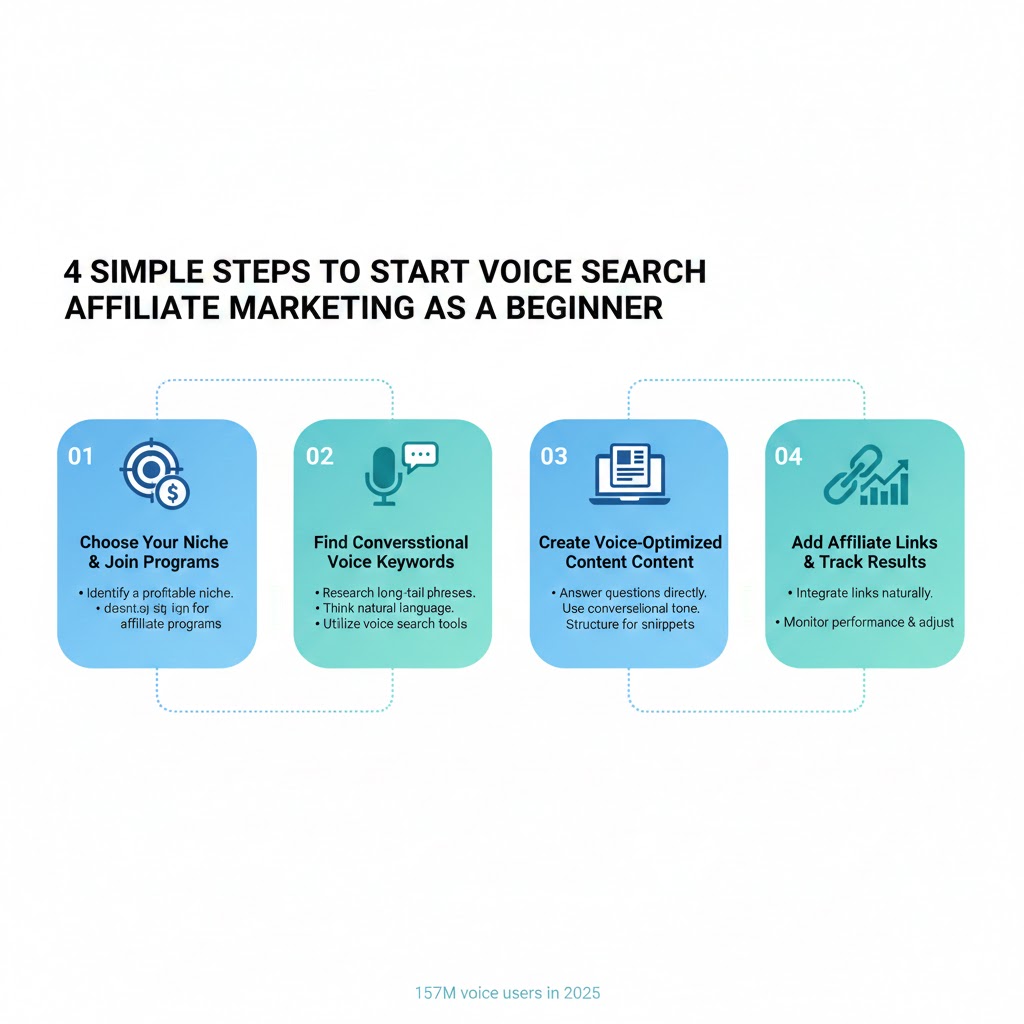
Getting started with voice search in affiliate marketing doesn’t require fancy setups—just smart, targeted adjustments. First, research conversational keywords using tools like SEMrush or free alternatives. Look for questions your audience asks, such as “How do beginners start affiliate marketing in 2026?” Then, build content around them.
Step 1: Choose a niche and join beginner-friendly programs. For high earners, try ones offering $100+ per sale, like Shopify or Semrush. Sign up via networks—it’s free and straightforward.
Step 2: Create question-focused content. Write blog posts or videos answering queries like “What’s affiliate marketing and how does it work?” Include natural links to resources, such as this explanation of affiliate marketing in 2026.
Step 3: Optimize technically. Ensure your site loads fast, is mobile-optimized, and uses schema for reviews. Target local if applicable, as many voice searches are “near me” based.
Step 4: Track and tweak. Use analytics to see voice-driven traffic, then refine. Encourage testing: Try voicing your own queries to see what ranks, adjusting your content accordingly.
This method builds authority gradually, turning voice traffic into steady commissions.
Real-Life Examples and Scenarios
Let’s make this concrete with examples I’ve drawn from actual affiliate successes.
Example 1: Promoting AI tools for marketers. A beginner affiliate creates a guide titled “Best AI tools for affiliate beginners in 2026.” They optimize for voice by including sections like “How can AI help me with affiliate content?” Using tips from AI for affiliate marketing, they earn commissions from referrals. Why relevant? Voice users often seek quick advice, and this setup captures 49% better conversions via optimized video content. Simple math: If a tool pays 20% on $50 sales, 10 voice-driven referrals net $100.
Example 2: High-ticket hosting promotions. Target queries like “What’s the easiest hosting for affiliate sites?” Link to programs earning $100+ per sale, such as Kinsta. A voice-optimized review might double views from 100 to 200, boosting earnings from $60 to $180 at 30% commission on $100 items. This works for beginners because it solves setup pains directly.
Example 3: Niche product reviews. For travel affiliates, answer “Best affiliate programs for luxury travel?” Promote Villiers, earning $100+ per booking. Voice optimization with conversational tone increases engagement, as users trust spoken recommendations. Relevance: In a mobile world, voice drives impulse decisions, turning queries into sales fast.
These show how blending voice strategies with affiliate tactics yields real results—test variations to see what clicks for your audience.
Tools and Resources to Get Started
As the creator behind resources like those on Golis Guide, I recommend starting with accessible tools. For keyword research, use free versions of Ahrefs or Google Keyword Planner to find voice-friendly phrases.
Integrate AI helpers: ChatGPT for brainstorming content, or Surfer SEO for optimization, which analyzes top pages for natural language fits. Pair this with affiliate networks offering training.
Explore high-paying options through affiliate programs earning $100 per sale to maximize returns. And for core knowledge, check what affiliate marketing is and how it works.
These resources empower beginners to experiment—try inputting different queries into voice devices and refine based on results.
Frequently Asked Questions
What is the best way for beginners to optimize affiliate content for voice search?
Start by focusing on long-tail, question-based keywords that match spoken language. Create concise answers in your content, aim for featured snippets, and use schema markup. This boosts visibility without advanced skills—test by speaking queries yourself.
How does AI tie into voice search for affiliate marketing?
AI tools generate content ideas and optimize for natural queries, making voice-friendly promotions easier. For instance, they suggest variations that align with trends, helping beginners personalize and scale efforts efficiently. Tip: Use prompts like “Generate voice-optimized affiliate review” to speed things up.
Is voice search worth it for new affiliates with small audiences?
Absolutely—it’s less competitive than traditional SEO, and with voice users growing to 157 million in the US by 2026, even small sites can capture targeted traffic. Focus on niche questions to build momentum gradually.
Conclusion
To recap, mastering voice search as a beginner affiliate means embracing conversational content, optimizing technically, and leveraging tools for real results. From choosing niches to tracking commissions, these steps turn spoken queries into income streams. You’ve got the foundation—now dive in, test scenarios on your devices, and watch your efforts pay off.
Ready to level up? Head over to Golis Guide for more tools and insights. Remember, consistency wins in this space; start optimizing today, and you’ll see the practical rewards soon.