Are you Affiliate Marketing for Beginners dreaming of generating income online, but feel overwhelmed by the sheer number of options available in 2025? Imagine a business model where you don’t need to create your own products, handle customer service, or manage inventory, yet you can still earn substantial commissions by simply recommending products you love. Welcome to the exciting world of affiliate marketing! This comprehensive guide to affiliate marketing for beginners will demystify the process, providing you with the knowledge and actionable steps you need to launch your own successful venture.
For many, Affiliate Marketing for Beginners the idea of making money online seems like a distant dream, fraught with complexity and risk. I remember when I first stumbled upon Affiliate Marketing for Beginners. It felt too good to be true, a secret handshake in the digital world. But after diving in, learning the ropes, and making my first few commissions, I realized its incredible potential. It’s a path that has transformed countless lives, offering flexibility, financial freedom, and the ability to work from anywhere. This article is your essential blueprint, designed specifically for affiliate marketing for beginners, to help you navigate this journey with confidence and clarity in 2025.
Table of Contents
Key Takeaways
- Affiliate marketing is promoting other companies’ products/services and earning a commission for sales made through your unique affiliate link.
- The core steps involve choosing a niche, selecting a platform, creating valuable content, joining affiliate programs, driving traffic, and analyzing performance.
- Success hinges on building trust with your audience and providing genuine value, not just pushing products.
- It’s a scalable business model that requires consistent effort, patience, and continuous learning, offering significant earning potential over time.
- Starting your journey in 2025 offers unique opportunities due to evolving digital trends and increasing online consumption Affiliate Marketing for Beginners.
What is Affiliate Marketing and How Does It Work for Beginners?
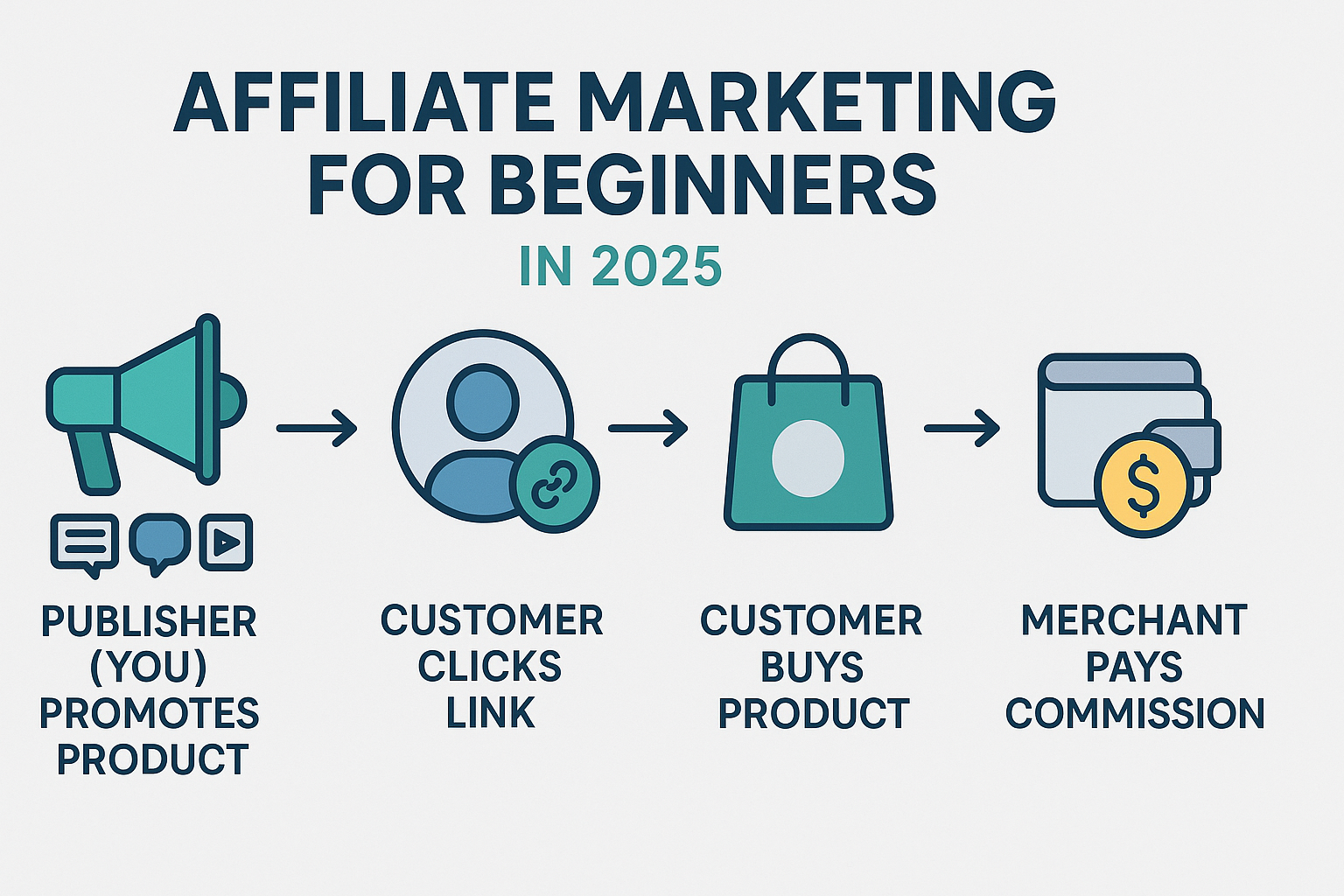
At its heart, Affiliate Marketing for Beginners is a performance-based marketing strategy where a business rewards one or more Affiliate Marketing for Beginners for each visitor or customer brought by the affiliate’s own marketing efforts. Think of it like this: you become a digital salesperson for a company, but instead of a fixed salary, you earn a commission on every sale you help generate. It’s an attractive model, especially for affiliate marketing for beginners, because it removes many of the traditional barriers to starting a business.
Let’s break down the core components of how Affiliate Marketing for Beginners operates:
- The Merchant (or Advertiser): This is the company that creates the product or service. It could be a small business selling handmade crafts or a giant like Amazon selling millions of items. They want to sell more, and they’re willing to pay you to help.
- The Affiliate (or Publisher): That’s you! You promote the merchant’s products to your audience. This promotion can happen through various channels: a blog, a YouTube channel, social media, an email list, or even a podcast.
- The Consumer: This is the person who ultimately buys the product after being influenced by your promotion.
- The Affiliate Network: Often, Affiliate Marketing for Beginners and merchants connect through an affiliate network (e.g., ShareASale, CJ Affiliate, Amazon Associates). These platforms act as intermediaries, handling tracking, payments, and providing a directory of available programs.
Here’s a simple scenario to illustrate the process:
- Step 1: You (the affiliate) join an affiliate program. Let’s say you love reviewing tech gadgets. You might join the Amazon Associates program.
- Step 2: You get a unique affiliate link. This link is crucial because it contains a special tracking code that identifies you as the referrer.
- Step 3: You promote a product. You write a fantastic review of the new ‘XYZ Smartwatch’ on your blog, sharing your honest thoughts and insights. At the end of the review, you include your affiliate link, encouraging readers to check it out on Amazon.
- Step 4: A potential customer clicks your link. Intrigued by your review, a reader clicks your affiliate link to view the smartwatch on Amazon.
- Step 5: The customer makes a purchase. The reader decides to buy the XYZ Smartwatch (and maybe a few other items while they’re at it!).
- Step 6: You earn a commission! Because the customer clicked your unique link, Amazon knows you referred them. You receive a predetermined percentage of the sale price as your commission. This typically happens after a ‘cookie duration’ (a set period, usually 24 hours to 90 days) during which your referral is tracked.
It’s a win-win-win situation:
- Merchant: Gets more sales without upfront marketing costs. They only pay when a sale is made.
- Affiliate: Earns money without creating a product or handling customer service.
- Consumer: Discovers useful products through trusted recommendations.
For affiliate marketing for beginners, the appeal lies in its low barrier to entry. You don’t need a huge budget to start. What you do need is dedication, a willingness to learn, and a passion for helping others discover valuable products or services. In 2025, with more people shopping and researching online than ever before, the opportunities in affiliate marketing are truly immense.
A common misconception among newcomers is that Affiliate Marketing for Beginners is a get-rich-quick scheme. While stories of rapid success exist, they are exceptions, not the rule. Like any legitimate business, it requires consistent effort, strategic planning, and patience. My own journey wasn’t an overnight sensation. My first few months yielded barely enough to cover my website hosting, but I kept learning, refining my approach, and slowly but surely, the commissions started to grow. It’s a marathon, not a sprint.
Why Affiliate Marketing is Ideal for Beginners in 2025
The digital landscape in 2025 presents a fertile ground for Affiliate Marketing for Beginners. Here’s why it’s an excellent choice for newcomers:
- Low Startup Costs: Unlike traditional businesses, you don’t need capital for inventory, storefronts, or extensive staff. You can start with a simple blog or a social media page.
- No Product Creation or Inventory: This is a huge relief for beginners. You focus solely on marketing, leaving product development and fulfillment to the merchant.
- Flexibility and Freedom: Work from anywhere, at any time. This lifestyle flexibility is a major draw for many. I’ve personally run my affiliate business from coffee shops, different countries, and even my couch!
- Scalability: Once you find what works, you can easily scale your efforts by promoting more products, expanding into new niches, or diversifying your traffic sources.
- Passive Income Potential: While not entirely “passive” (it requires initial work), once your content is out there and generating traffic, it can continue to earn commissions even when you’re not actively working.
- Learn Valuable Digital Skills: As an Affiliate Marketing for Beginners, you’ll gain expertise in SEO, content creation, social media marketing, email marketing, and analytics – all highly marketable skills.
- Diverse Niches and Products: From pet supplies to software, fitness programs to financial services, there’s an affiliate product for almost every interest. This allows you to monetize your passions.
It’s clear that affiliate marketing for beginners offers a compelling pathway to online entrepreneurship. However, understanding the mechanics is only the first step. The real journey begins when you start to implement these concepts.
Your Step-by-Step Guide to Affiliate Marketing for Beginners in 2025
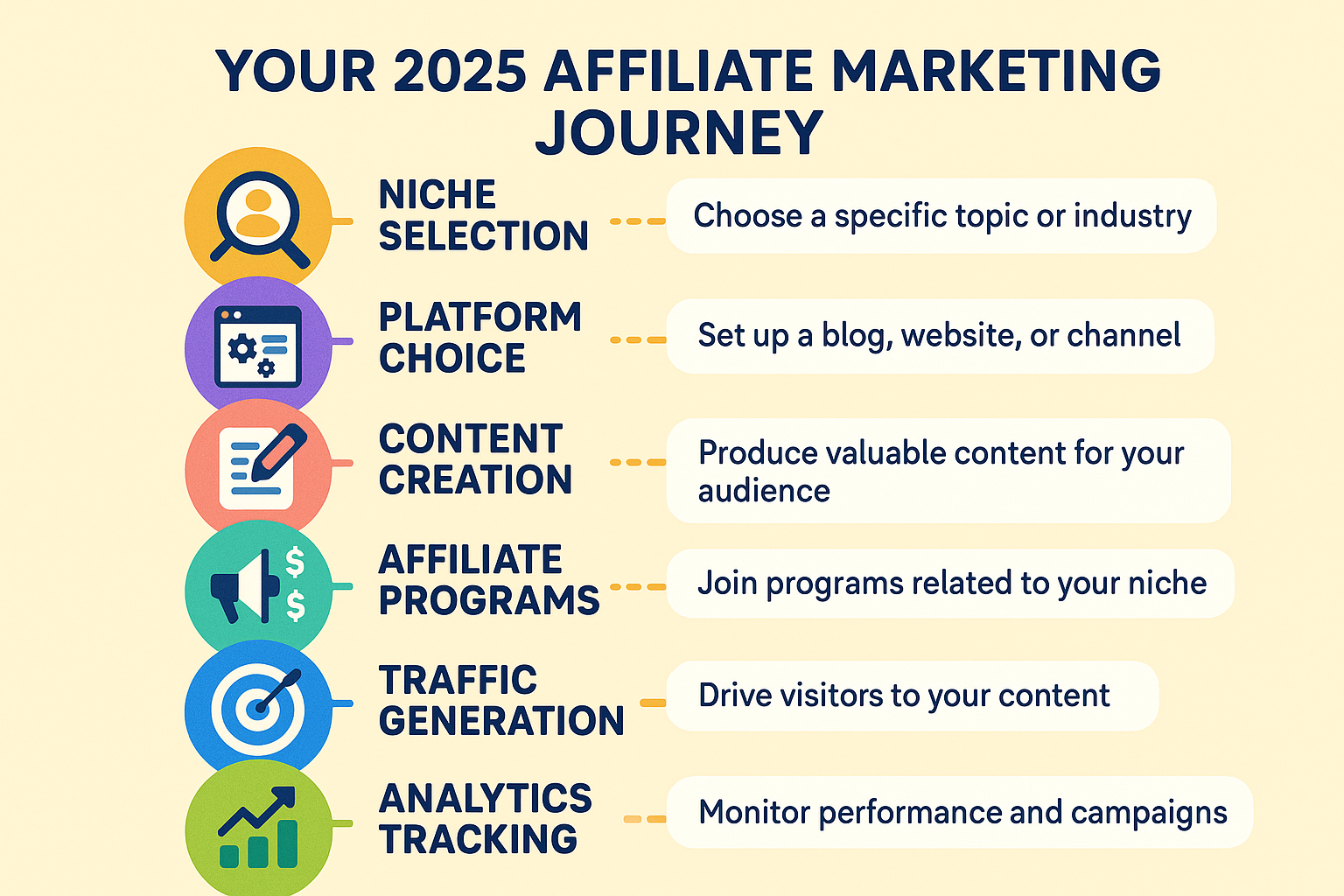
Embarking on your Affiliate Marketing for Beginners journey in 2025 requires a structured approach. Think of this section as your battle plan. We’ll walk through the essential steps, from foundational decisions to growth strategies.
Step 1: Choose Your Niche (The Foundation of Affiliate Marketing for Beginners)
This is perhaps the most critical decision for affiliate marketing for beginners. Your niche is the specific segment of a market you’ll focus on. Don’t try to appeal to everyone; that’s a recipe for failure.
How to Choose a Profitable Niche:
- Passion and Interest: Start with what genuinely excites you. If you’re passionate about a topic, you’ll be more motivated to create content and stay updated. Your enthusiasm will also resonate with your audience.
- Anecdote: When I first started, I tried to cover too many topics I thought were “profitable.” It felt like a chore. Once I narrowed down to something I truly enjoyed – sustainable living products – my content became more authentic, and my audience grew exponentially.
- Problem-Solving: Think about problems people are actively looking to solve. Products that offer solutions are often highly marketable.
- Examples: weight loss, financial planning, learning a new skill, improving relationships, pet care issues.
- Market Demand & Profitability: Use tools like Google Trends, Ahrefs, or Semrush to research search volume and competition. Look for niches with an audience actively searching for solutions and products. Consider the average commission rates in different niches. Software, finance, and health products often have higher commissions than physical goods.
- Competition: Don’t shy away from competition entirely, as it often signifies a profitable market. However, look for ways to differentiate yourself. Can you offer a unique perspective, a specific sub-niche, or a better content experience?
- Pull Quote: “The riches are in the niches, but the real wealth is in solving specific problems within those niches.”
- Evergreen vs. Trendy: Evergreen niches (e.g., health, wealth, relationships) tend to have consistent demand, while trendy niches can offer quick wins but fade fast. A mix or focus on evergreen is generally safer for beginners.
Actionable Tip: Brainstorm 5-10 topics you’re interested in. Then, for each, ask yourself: Is there a clear problem this niche addresses? Are there products available to promote? Is there enough search volume? Can I add unique value?
Step 2: Select Your Platform
Once you have your niche, you need a platform to reach your audience. For affiliate marketing for beginners, the most common and effective choices include:
- Blog/Website: This is often considered the most stable and long-term asset. You own the platform, control the content, and can optimize for search engines (SEO).
- Pros: Full control, strong for SEO, diverse content types (reviews, guides, comparisons), builds authority.
- Cons: Requires some technical setup (though easier than ever with WordPress), takes time to build traffic.
- Setup Tip: Start with WordPress.org (needs hosting and a domain name – affordable in 2025!) and a reliable web host like SiteGround or Bluehost.
- YouTube Channel: Excellent for visual learners and demonstrating products. Video content can be highly engaging and build strong trust.
- Pros: High engagement, visual demonstrations, strong community building, good for product reviews and tutorials.
- Cons: Requires video editing skills, can be time-consuming, equipment costs (initially modest).
- Social Media (Instagram, TikTok, Pinterest): Great for visual niches (fashion, beauty, home decor) or short-form, engaging content.
- Pros: Large existing audiences, viral potential, direct engagement.
- Cons: Less control (algorithm changes), often shorter content lifespan, platform-specific rules.
- Strategy: Focus on one or two platforms initially. Leverage relevant hashtags and engaging visuals.
- Email List: Extremely powerful for direct communication and building a loyal audience. You “own” your email list, making it a valuable asset.
- Pros: High conversion rates, direct communication, evergreen asset.
- Cons: Requires generating leads, needs an email service provider (e.g., ConvertKit, Mailchimp).
- Integration: Best used in conjunction with a blog or YouTube channel to capture emails.
For beginners, I recommend starting with a blog or a YouTube channel as your primary content hub, then expanding to social media and email as you gain momentum.
Step 3: Create High-Quality, Value-Driven Content
This is where you build trust and differentiate yourself. Don’t just slap affiliate links onto thin content. Your goal is to educate, entertain, and solve problems for your audience.
Content Strategies for Affiliate Marketing for Beginners:
- Product Reviews: Honest, in-depth reviews of products you’ve used and genuinely recommend. Include pros, cons, personal experiences, and alternatives.
- Comparison Guides: “Product A vs. Product B” or “Top 5 [Product Type] for [Specific Need]”. Help consumers make informed decisions.
- How-To Guides/Tutorials: Show people how to use a product or solve a problem using a product.
- “Best Of” Lists: Curated lists of top products in a category (e.g., “Best Laptops for Students in 2025”).
- Problem/Solution Articles: Address a common pain point in your niche and present affiliate products as viable solutions.
Key Content Principles:
- Honesty & Transparency: Always disclose that you use affiliate links. It’s a legal requirement in many places and builds trust.
- Value First: Focus on providing genuine value to your audience. Answer their questions, solve their problems, and entertain them.
- Solve a Problem: Every piece of content should aim to help your audience in some way.
- SEO Optimization: For blogs and YouTube, research keywords your audience is searching for and optimize your content (titles, headings, descriptions, content body) to rank higher in search results.
- Engage: Respond to comments, ask questions, and foster a community around your content.
Remember, content is your long-term asset. A well-written blog post or a helpful video created in 2025 can continue to drive traffic and commissions for years to come.
Step 4: Join Relevant Affiliate Programs
Once you have your platform and some initial content, it’s time to find products to promote.
Types of Affiliate Programs:
- Affiliate Networks: These are marketplaces connecting merchants and affiliates. They offer a wide range of products across various niches.
- Examples:
- Amazon Associates: Great for physical products. Easy to get started, but commission rates can be lower. Excellent for affiliate marketing for beginners due to its vast catalog.
- ShareASale: Large network with diverse programs, especially for smaller businesses and niche products.
- CJ Affiliate (formerly Commission Junction): Many large brands use CJ.
- Rakuten Marketing: Another prominent network with various advertisers.
- Impact: Focuses on SaaS, direct-to-consumer, and larger brands.
- Benefits: Centralized reporting, diverse options, streamlined payments.
- Examples:
- Direct Merchant Programs: Many companies run their own affiliate programs directly from their website. You might find higher commission rates here.
- How to Find: Search “[Brand Name] affiliate program” or “[Niche] affiliate program.”
- SaaS (Software as a Service) Affiliate Programs: Often offer recurring commissions, which can be very lucrative.
- Examples: SEMrush, ClickFunnels, various VPNs, web hosting companies.
Tips for Choosing Programs:
- Relevance: Only promote products relevant to your niche and audience.
- Reputation: Promote products from reputable companies with good customer service. You don’t want to jeopardize your audience’s trust.
- Commission Rates: While higher is generally better, balance it with product quality and relevance. A 10% commission on a $100 product is better than a 50% commission on a $5 product your audience doesn’t need.
- Cookie Duration: This refers to how long your referral is tracked after a click. Longer durations (e.g., 60-90 days) are generally better.
- Conversion Rate: If possible, look for programs with good conversion rates (how many clicks turn into sales). Networks often provide this data.
My Personal Rule: I only promote products I’ve personally used, thoroughly researched, or would confidently recommend to a friend or family member. Authenticity is paramount.
Step 5: Drive Traffic to Your Affiliate Links
You have great content and awesome products. Now, how do you get people to see them?
- Search Engine Optimization (SEO): For blogs and YouTube, optimizing your content for search engines is crucial.
- Keyword Research: Identify terms your audience uses (e.g., “best budget gaming laptop 2025”).
- On-Page SEO: Optimize titles, headings, meta descriptions, image alt text, and content body with keywords.
- Backlinks: Get other reputable websites to link to your content (a sign of authority to Google).
- Social Media Marketing: Share your content and engage with your audience on platforms like Facebook, Instagram, Pinterest, or TikTok.
- Note: Always check platform-specific rules for affiliate links. Some (like Pinterest) are more affiliate-friendly than others.
- Email Marketing: Build an email list and send newsletters with valuable content, product recommendations, and special offers. This is one of the most effective ways to convert leads.
- Paid Advertising (Google Ads, Facebook Ads): While more advanced, paid ads can drive immediate traffic. For affiliate marketing for beginners, I recommend mastering organic traffic first. If you do venture into paid ads, start small and track meticulously.
- Guest Posting/Collaborations: Write for other blogs in your niche or collaborate with other content creators to tap into their audience.
Focus on one or two traffic sources initially and master them before diversifying. SEO and content marketing are powerful for long-term, sustainable traffic.
Step 6: Track and Analyze Your Performance
You can’t improve what you don’t measure. Tracking your results is essential for refining your strategy.
- Affiliate Network Dashboards: Most networks provide detailed reports on clicks, conversions, and earnings.
- Google Analytics: If you have a website, Google Analytics is indispensable for understanding your audience, their behavior, and where your traffic comes from.
- Heatmap Tools (e.g., Hotjar): See how users interact with your pages, where they click, and where they get stuck.
- A/B Testing: Test different headlines, calls to action, or product placements to see what performs best.
Key Metrics to Monitor:
- Click-Through Rate (CTR): How many people click your affiliate links compared to how many see them.
- Conversion Rate: How many clicks lead to a sale.
- Earnings Per Click (EPC): How much you earn, on average, for each click.
- Return on Investment (ROI): If you’re paying for traffic or tools, are you getting a good return?
Analyzing this data will help you identify what’s working and what isn’t, allowing you to optimize your content, product choices, and traffic strategies.
Step 7: Scale and Grow Your Affiliate Business
Once you’ve achieved some initial success, it’s time to think about scaling.
- Diversify Affiliate Programs: Don’t put all your eggs in one basket. Explore new affiliate programs within your niche.
- Expand Content Formats: If you started with a blog, consider adding YouTube videos or a podcast.
- Explore New Traffic Sources: Once you’ve mastered one traffic method, start experimenting with others.
- Build an Email List: If you haven’t already, make this a priority. It’s one of the most powerful assets you can build.
- Outsource: As your business grows, consider outsourcing tasks like content writing, video editing, or social media management to free up your time for strategic growth.
- Reinvest: Reinvest a portion of your earnings back into your business for better tools, advertising, or content creation.
Affiliate marketing for beginners is a journey of continuous learning and adaptation. The digital world is constantly evolving, and staying updated on trends, algorithm changes, and new marketing techniques will be key to your long-term success in 2025 and beyond. Be patient, stay persistent, and always prioritize providing value to your audience Affiliate Marketing for Beginners.
Affiliate Niche Selector (2025) Affiliate Marketing for Beginners
Discover Your Perfect Affiliate Niche (2025)
Answer a few quick questions to get personalized niche suggestions tailored for affiliate marketing beginners!
Click “Suggest My Niche!” to see your personalized recommendations for 2025.
Conclusion: Your Journey into Affiliate Marketing in 2025 Begins Now
You’ve just absorbed a significant amount of information about affiliate marketing for beginners, arming yourself with the foundational knowledge needed to embark on this exciting journey in 2025. From understanding the core mechanics to outlining a step-by-step launch plan, you now know that affiliate marketing is a powerful, flexible, and potentially lucrative way to earn income online without the traditional headaches of product creation or inventory management Affiliate Marketing for Beginners.
Remember, the key to success in Affiliate Marketing for Beginners isn’t just about finding the highest commission rates or the trendiest products. It’s about building trust with your audience, providing genuine value, and consistently delivering high-quality, helpful content. Your authenticity is your most valuable asset Affiliate Marketing for Beginners.
Here are your actionable next steps:
- Refine Your Niche: Revisit Step 1 and spend dedicated time identifying a niche that aligns with your passions, solves real problems, and has market demand. Use the interactive tool above to kickstart your ideas!
- Choose Your Platform: Decide whether a blog, YouTube channel, or a combination is the best starting point for you. Get your domain name and hosting, or set up your channel.
- Start Creating Content: Don’t wait for perfection. Begin crafting your first pieces of valuable content, whether they are product reviews, how-to guides, or comparison articles. Remember to prioritize quality and helpfulness.
- Join Your First Affiliate Program: Once you have some content, seek out relevant affiliate programs (starting with networks like Affiliate Marketing for Beginners Amazon Associates or ShareASale is often easiest for beginners).
- Commit to Learning and Consistency: Affiliate Marketing for Beginners is a marathon. Dedicate time each week to learning new strategies, analyzing your performance, and consistently producing content Affiliate Marketing for Beginners.
The digital landscape Affiliate Marketing for Beginners of 2025 is ripe with opportunities for those willing to learn and put in the effort. The demand for authentic recommendations and problem-solving content is only growing. So, take what you’ve learned today, apply it diligently, and step confidently into the world of affiliate marketing. Your future self, enjoying the flexibility and financial potential, will thank you. Good luck on your journey!