

Has the dream of earning income online ever felt just out of reach? affiliate for beginners Perhaps you’ve heard whispers of people making money while they sleep, all thanks to something called “affiliate for beginners.” If that sounds like you, and you’re ready to dive into a world where your recommendations can turn into real income, then you’re in the right place. Welcome to 2025, a year brimming with opportunities for those ready to learn the ropes of affiliate marketing. This comprehensive guide is specifically designed as your ultimate resource for affiliate for beginners, demystifying the process and providing actionable steps to kickstart your journey.
affiliate for beginners, at its core, is quite simple: you promote products or services you believe in, and when someone makes a purchase through your unique link, you earn a commission. It’s a performance-based marketing strategy that connects merchants with customers through trusted voices—like yours. But simple doesn’t always mean easy, and navigating this landscape requires a strategic approach, especially if you’re an affiliate for beginners. I’ve been in the digital marketing space for over a decade, and I’ve witnessed firsthand how this industry transforms lives. What was once a niche pursuit has now become a mainstream path to entrepreneurship, and with the right guidance, you can absolutely carve out your own success story affiliate for beginners in 2025.
Table of Contents
Key Takeaways
- Understand the Fundamentals: affiliate for beginners involves promoting products/services and earning a commission for sales made through your unique link. It’s a performance-based model.
- Niche Selection is Crucial: Choose a niche you’re passionate about and knowledgeable in, with a viable audience and products to promote. This builds authenticity.
- Content is King: High-quality, valuable content (blogs, videos, social media) is essential for attracting and engaging your audience, establishing trust, and driving conversions.
- Traffic Generation & Analytics: Learn various strategies to drive traffic to your content, then use analytics to track performance, understand your audience, and optimize your efforts.
- Build Trust & Be Transparent: Always disclose your affiliate for beginners relationships. Authenticity and transparency are paramount for long-term success and building a loyal audience.
Understanding the Affiliate Marketing Ecosystem for Beginners in 2025
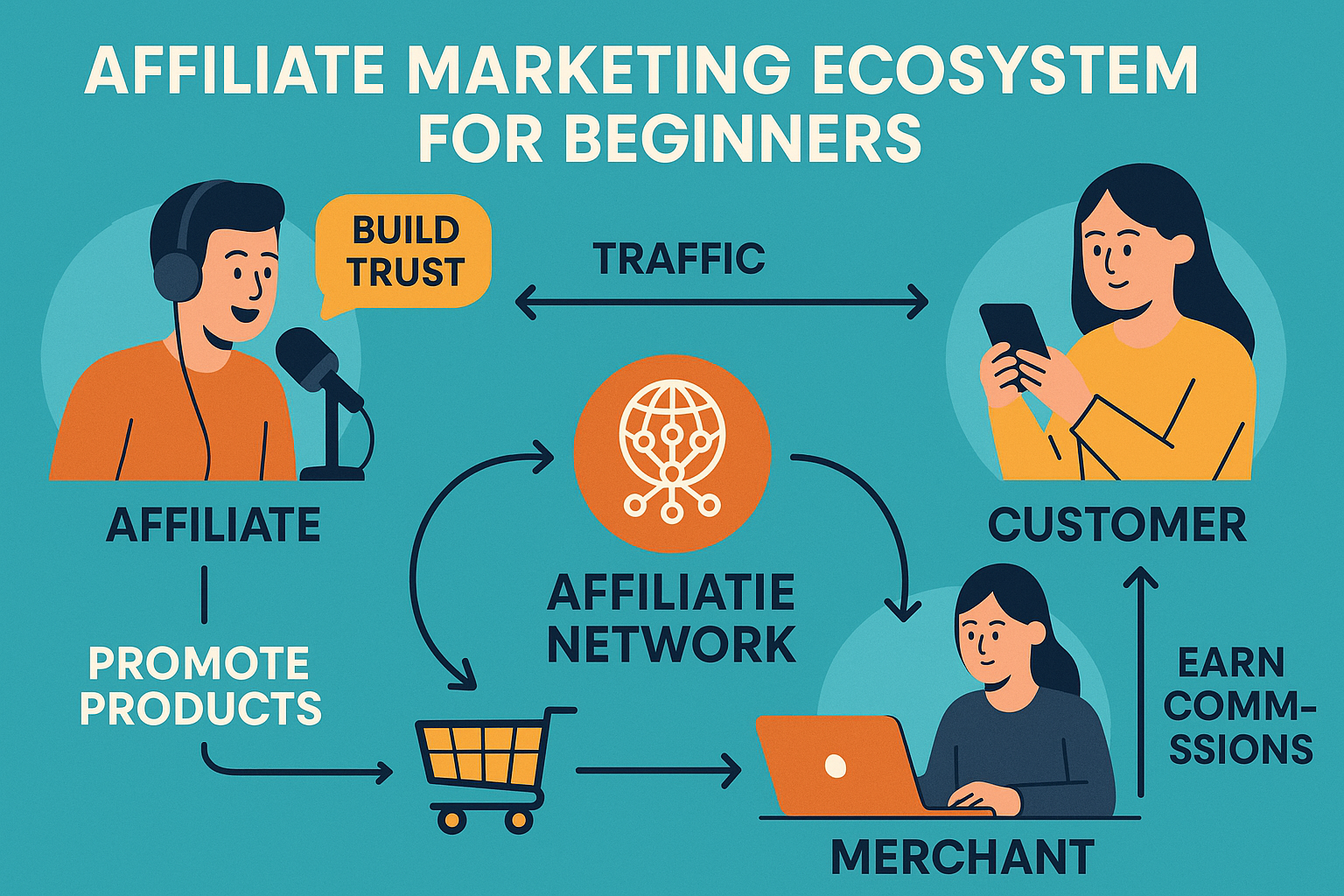
Before we start building, let’s understand the foundation. Think of affiliate marketing as a beautifully choreographed dance involving several key players. As an affiliate for beginners, understanding these roles will clarify where you fit in and how the money moves affiliate for beginners.
The Four Pillars of Affiliate Marketing:
- The Merchant (or Creator/Seller): This is the company or individual who creates the product or service. It could be a large e-commerce store like Amazon, a software company, a creator selling an online course, or even a local business. They want to sell more, and they’re willing to pay a commission for successful referrals.
- The Affiliate (or Publisher/You!): That’s you! You’re the one promoting the merchant’s products. You could be a blogger, a social media influencer, an email marketer, or a YouTube creator. Your job is to attract potential customers and convince them to purchase the merchant’s offering.
- The Consumer (or Customer): This is the person who buys the product or service. Without them, there are no sales, and thus, no commissions. Your goal is to provide value to these consumers, guiding them towards a solution that benefits them.
- The Affiliate Network (Optional, but Often Crucial): These are platforms that act as intermediaries between merchants and affiliates. They host thousands of affiliate programs, track sales, handle payments, and provide reporting tools. Examples include ShareASale, CJ Affiliate, Rakuten Advertising, and specialized networks affiliate for beginners for specific niches (like ClickBank for digital products). While you can sometimes work directly with a merchant, networks streamline the process significantly.
How Does it Actually Work? The Journey of a Commission
Let’s trace the path of a typical affiliate transaction affiliate for beginners.
- You Join an Affiliate Program: After deciding what you want to promote, you apply to an affiliate program, either directly with a merchant or through an affiliate network. Once approved, you get unique tracking links for the products you’ll promote.
- You Create Content: You write a blog post, record a video, create a social media carousel, or send an email recommending a product. Within this content, you embed your unique affiliate link.
- A Potential Customer Clicks: Someone reads your blog post about the best productivity apps for 2025, finds your review compelling, and clicks on your affiliate link for a specific app.
- The Customer Makes a Purchase: They land on the merchant’s website and, thanks to the cookie placed by your affiliate link, their activity is tracked. If they purchase the product within a certain timeframe (the “cookie duration,” which can range from 24 hours to 90 days or even longer), you’re credited with the sale.
- You Earn a Commission: The merchant’s system (or the affiliate network’s system) records the sale and attributes it to you. Once the sale is verified and any return periods pass, the merchant pays your commission, usually through the affiliate network or directly to you.
It’s truly a win-win-win scenario: the merchant gets sales, the customer finds a valuable product, and you earn money for your recommendation. For an affiliate for beginners, understanding this flow is step one to building a successful strategy.
Why Affiliate Marketing in 2025? The Power of This Model
In 2025, affiliate for beginners continues to be a powerful and attractive business model, especially for newcomers, for several reasons:
- Low Barrier to Entry: You don’t need to create your own product, manage inventory, or handle customer service. Your primary focus is on marketing and content creation. This significantly reduces startup costs and complexities.
- Flexibility and Freedom: You can work from anywhere with an internet connection, set your own hours, and scale your efforts as you see fit. It offers a level of freedom many traditional jobs simply can’t match.
- Scalability: Once you find what works, you can replicate and expand your strategies. You can promote multiple products, diversify your content, and reach a wider audience.
- Performance-Based: You’re rewarded directly for your efforts. The more effective your marketing, the more you earn.
- Diversification of Income: For existing content creators, it’s a natural way to monetize your audience without relying solely on ads or sponsorships.
My own journey into online business began years ago with a simple blog about my hobby. I wasn’t initially thinking about money, but as my audience grew, I realized I was constantly recommending products I loved. Integrating affiliate links was a natural next step, and it transformed my hobby into a profitable venture. That experience solidified for me that authenticity and genuine recommendations are at the heart of what makes affiliate for beginners truly work.
Your 2025 Roadmap: A Step-by-Step Guide for Affiliate for Beginners
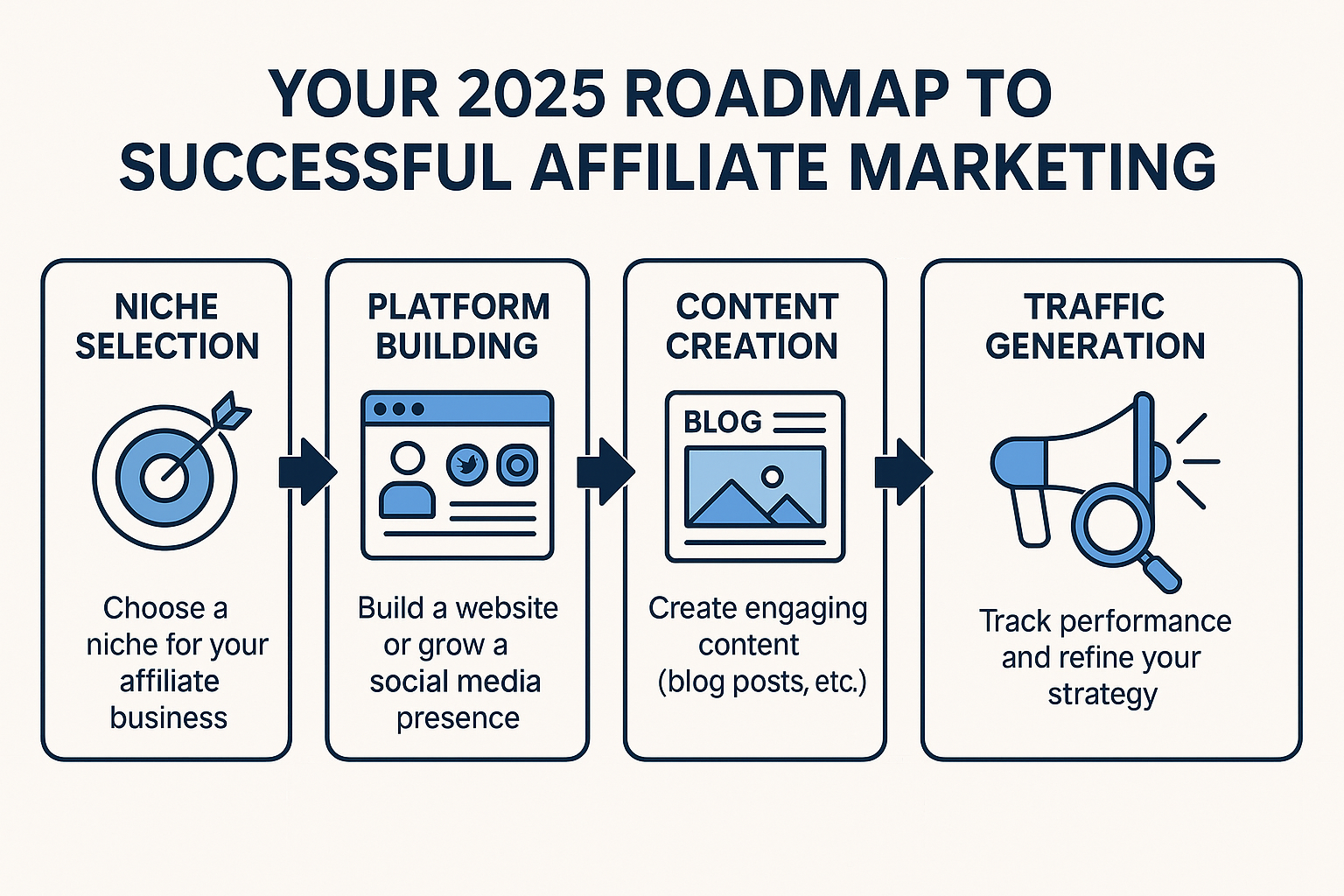
Alright, the stage is set. You understand the players and the game. Now, let’s talk about the practical steps you need to take to become a successful affiliate for beginners in 2025. This isn’t just theory; these are the actions that will move you from aspiration to actual income.
Step 1: Choose Your Niche Wisely
This is perhaps the most critical step. Your niche is the specific segment of the market you’ll focus on. Don’t try to appeal to everyone; that’s a recipe for appealing to no one.
How to Pick the Perfect Niche:
- Passion & Knowledge: What are you genuinely interested in? What topics do you already know a lot about, or are eager to learn more about? Your enthusiasm will shine through and build trust.
- Audience Demand: Is there an audience looking for information or solutions in this niche? Are people searching for products related to it? Use tools like Google Trends, keyword research tools (e.g., Ahrefs, SEMrush, even free ones like Google Keyword Planner), and social media trends to gauge interest.
- Product Availability: Are there actual affiliate for beginners products or services available in this niche? A niche with high demand but no products to promote won’t generate income. Look for both physical products and digital products (courses, software).
- Competition: Don’t be afraid of competition, but be realistic. A highly competitive niche might require more effort. Look for sub-niches or angles within broader niches (e.g., instead of “fitness,” consider “fitness for busy parents over 40”).
My Tip: When I first started, I chose a niche I thought was “profitable” but had zero passion for. It quickly felt like a chore, and my content lacked genuine enthusiasm. When I switched to something I truly cared about, the work became fun, and surprisingly, the income followed much more easily. Your authenticity is your superpower.
Step 2: Build Your Platform – Your Digital Home
Once you have your niche, you need a place to host your content and direct your audience. This will be your primary hub for all affiliate activities.
Popular Platform Choices for Affiliate for Beginners:
- Blog/Website: This is often the recommended starting point. You own your content, have full control, and it’s excellent for SEO (Search Engine Optimization).
- Pros: Full control, professional, great for in-depth reviews and guides, builds authority.
- Cons: Requires some technical setup (though platforms like WordPress make it easy), takes time to rank in search engines.
- Tools: WordPress (self-hosted), Squarespace, Wix.
- YouTube Channel: If you’re comfortable on camera or enjoy creating video content, YouTube is a massive platform.
- Pros: High engagement, visual demonstrations, strong community building.
- Cons: Requires video editing skills, can be time-consuming, competitive.
- Social Media (Instagram, TikTok, Pinterest, Facebook Groups): Great for visual content, quick tips, and direct engagement.
- Pros: High reach potential, immediate feedback, can go viral.
- Cons: Less control over your content, algorithm changes, shorter attention spans.
- Email List: Often built in conjunction with other platforms, but incredibly powerful for direct communication.
- Pros: Direct access to your audience, high conversion rates, builds strong relationships.
- Cons: Requires a platform to collect emails (e.g., a website), takes time to grow.
For an affiliate for beginners, I’d often recommend starting with a blog/website combined with one social media platform you enjoy. This gives you a stable home base and an active channel for outreach.
Step 3: Find Affiliate Programs and Products
Now that you have your niche and platform, it’s time to find products to promote!
Where to Look:
- Affiliate Networks: As mentioned, these are hubs for thousands of programs.
- General Networks: Amazon Associates (great for physical products, easy for beginners), ShareASale, CJ Affiliate, Rakuten Advertising.
- Niche-Specific Networks: ClickBank (digital products, often higher commissions), Impact.com (various brands).
- Direct Merchant Programs: Many companies run their own affiliate programs. Look for a “Partners,” “Affiliates,” or “Referral Program” link in the footer of websites you love.
- Your Own Experience: Think about products you genuinely use and love. If you’re already recommending them to friends, why not earn a commission?
Criteria for Choosing Products:
- Relevance: Does the product genuinely fit your niche and audience?
- Quality: Only promote products you believe in and would use yourself. Your reputation is paramount.
- Commission Rate: What percentage or fixed amount do you earn per sale? Higher commissions are great, but don’t sacrifice quality for a bigger payout.
- Cookie Duration: How long does your referral tracking last after someone clicks your link?
- Conversion Rate: While harder to know as a beginner, some programs convert better than others. Good merchant landing pages are key.
Step 4: Create Valuable Content
This is where you earn your audience’s trust and guide them toward a purchase. Your content isn’t just about selling; it’s about providing solutions and valuable information.
Types of Content for Affiliate for Beginners:
- Product Reviews: In-depth analyses of products, comparing features, pros, and cons.
- How-To Guides/Tutorials: Show people how to use a product or solve a problem using a product.
- Comparison Posts: “Product A vs. Product B,” helping readers choose.
- “Best Of” Lists: “5 Best Laptops for Students in 2025,” “Top 10 Tools for Digital Nomads.”
- Problem/Solution Content: Identify a common problem in your niche and present products as the solution.
- Case Studies/Personal Stories: Share your own experience using a product to achieve a specific result.
Content Best Practices for 2025:
- Focus on Value: Educate, entertain, and solve problems first. Selling comes naturally from that.
- Be Authentic & Transparent: Always disclose that you’re using affiliate links. It’s not only ethical but often legally required. Something simple like “This post contains affiliate links, meaning if you make a purchase, I may earn a small commission at no extra cost to you” is sufficient.
- Quality Over Quantity: A few excellent, well-researched pieces of content are better than many rushed, shallow ones.
- Optimize for SEO: Use keywords related to your niche and products so people can find your content through search engines.
- Call to Action (CTA): Clearly tell your audience what you want them to do next (e.g., “Click here to learn more,” “Get Product X on Amazon”).
Step 5: Drive Traffic to Your Content
Great content is useless if no one sees it. This is where your marketing skills come into play.
Traffic Generation Strategies for Affiliate for Beginners:
- Search Engine Optimization (SEO): Optimizing your website and content to rank higher in Google and other search engines. This is a long-term strategy but provides consistent, free traffic.
- Tactics: Keyword research, on-page optimization (titles, headings, content structure), building backlinks.
- Social Media Marketing: Share your content across relevant social platforms. Engage with your audience, answer questions, and build a community.
- Tactics: Post regularly, use relevant hashtags, engage in comments, use stories and reels.
- Email Marketing: Build an email list and send out newsletters with valuable content and product recommendations.
- Tactics: Offer a freebie (e.g., an e-book, checklist) in exchange for an email address.
- Paid Advertising (Google Ads, Facebook Ads): While effective, this is generally not recommended for an affiliate for beginners as it requires a budget and a strong understanding of conversion rates to be profitable. Focus on free strategies first.
- Guest Posting: Write articles for other websites in your niche, including a link back to your content.
Remember, consistency is key in traffic generation. Don’t expect overnight success. It’s a marathon, not a sprint.
Step 6: Analyze and Optimize
Once your content is out there and traffic is flowing, you need to know what’s working and what’s not.
Key Metrics to Track:
- Clicks: How many people are clicking your affiliate links?
- Conversions/Sales: How many of those clicks are turning into actual purchases?
- Commission Earned: Your actual income.
- Traffic Sources: Where are your visitors coming from? (Google Analytics is your friend here).
- Page Views/Engagement: Which content pieces are most popular? How long are people staying on your pages?
Tools for Analysis:
- Google Analytics: Free and essential for understanding website traffic.
- Affiliate Network Dashboards: Provide detailed reports on clicks, sales, and commissions.
- Website Heatmaps (e.g., Hotjar): Show where users are clicking and scrolling on your pages.
Optimization Strategies:
- A/B Testing: Test different headlines, call-to-action buttons, or even product placements to see what performs best.
- Content Updates: Refresh old content, add new information, or update product recommendations.
- Improve CTAs: Make your calls to action more compelling.
- Experiment with Traffic Sources: If one social media platform isn’t working, try another.
- Niche Refinement: If certain product categories perform poorly, consider pivoting slightly within your niche.
This iterative process of analysis and optimization is crucial. It’s how you refine your strategy, maximize your earnings, and continue to grow as an affiliate for beginners.
Step 7: Stay Ethical and Transparent (Crucial for 2025 and Beyond)
As an affiliate for beginners, building a reputation for trustworthiness is your greatest asset.
- Disclosure is Non-Negotiable: Always disclose your affiliate for beginners relationships. Not only is it good practice, but the Federal Trade Commission (FTC) in the U.S. and similar bodies worldwide require it. A simple sentence at the beginning of your content is usually enough.
- Promote What You Believe In: Only recommend products and services you genuinely use or would confidently recommend to a friend or family member. Your audience will sense insincerity.
- Provide Balanced Reviews: Even if you love a product, acknowledge its downsides or who it might not be for. This builds immense credibility.
- Don’t Make False Claims: Stick to the facts and don’t exaggerate benefits.
Building a sustainable affiliate business is about cultivating a loyal audience, and that loyalty is built on trust. By following these steps and prioritizing ethics, you’re not just building a business; you’re building a brand.
Affiliate Profit Estimator for Beginners (2025) 🚀
Estimate your potential monthly affiliate earnings. Experiment with different values!
Estimated Clicks to Affiliate Links: 0
Estimated Monthly Sales: 0
Estimated Monthly Revenue (before commission): $0.00
Your Estimated Monthly Affiliate Earnings: $0.00
Conclusion: Your Journey as an Affiliate for Beginners in 2025
Embarking on the journey of affiliate for beginners in 2025 as a beginner can feel both exciting and overwhelming. However, by systematically approaching each step outlined in this guide, you can lay a solid foundation for long-term success. Remember, affiliate for beginners is not a get-rich-quick scheme. It requires dedication, continuous learning, and a genuine desire to provide value to your audience.
What I’ve seen time and again with successful affiliates is their unwavering commitment to consistency and quality. They don’t just chase commissions; they build communities, solve problems, and become trusted resources in their chosen niches. This is your opportunity to do the same. affiliate for beginners
Actionable Next Steps for You:
- Revisit Your Niche: Spend dedicated time researching and refining your niche. Ensure it aligns with your passion, has an audience, and offers suitable products.
- Choose Your Core Platform: Decide whether a blog, YouTube channel, or a specific social media platform will be your primary home base. Start setting it up!
- Brainstorm Content Ideas: Based on your niche, list 10-15 potential content ideas (e.g., specific product reviews, “how-to” guides).
- Explore Affiliate Programs: Start browsing affiliate networks and merchant websites for programs relevant to your niche. Don’t apply yet, just get familiar.
- Commit to Consistency: Schedule regular time each week for content creation, promotion, and learning. Even an hour a day can make a huge difference.
The digital landscape in 2025 is ripe with opportunities for those willing to learn and adapt. As an affiliate for beginners, you have the advantage of fresh perspective and new ideas. Don’t be afraid to experiment, learn from your mistakes, and celebrate your small victories along the way. I’m excited for you to start this journey. Go forth and build something amazing!
SEO Meta Title: Affiliate for Beginners: Your 2025 Guide to Online Income
SEO Meta Description: Start affiliate marketing in 2025! This beginner’s guide covers niche selection, platforms, content, traffic, and earning your first commissions.