

Are you ready to transform your digital presence into a consistent stream of income? In 2025, the world of affiliate marketing affiliate programs stands as one of the most accessible and powerful avenues for entrepreneurs, content creators, and businesses to generate substantial revenue online. It’s more than just selling products; it’s about building trust, providing value, and strategically connecting audiences with solutions they genuinely need. If you’ve ever dreamed of earning commissions while promoting products or services you believe in, without the hassles of inventory, shipping, or customer service, then diving deep into affiliate marketing affiliate programs is your next logical step. I’ve seen firsthand how a well-chosen program can be a game-changer, transforming side hustles into full-fledged enterprises.
Table of Contents
Key Takeaways
- Diverse Program Landscape: The affiliate marketing affiliate programs ecosystem is vast, encompassing various niches, commission structures (CPA, CPL, RevShare), and product types (physical, digital, services). Choosing the right fit is paramount.
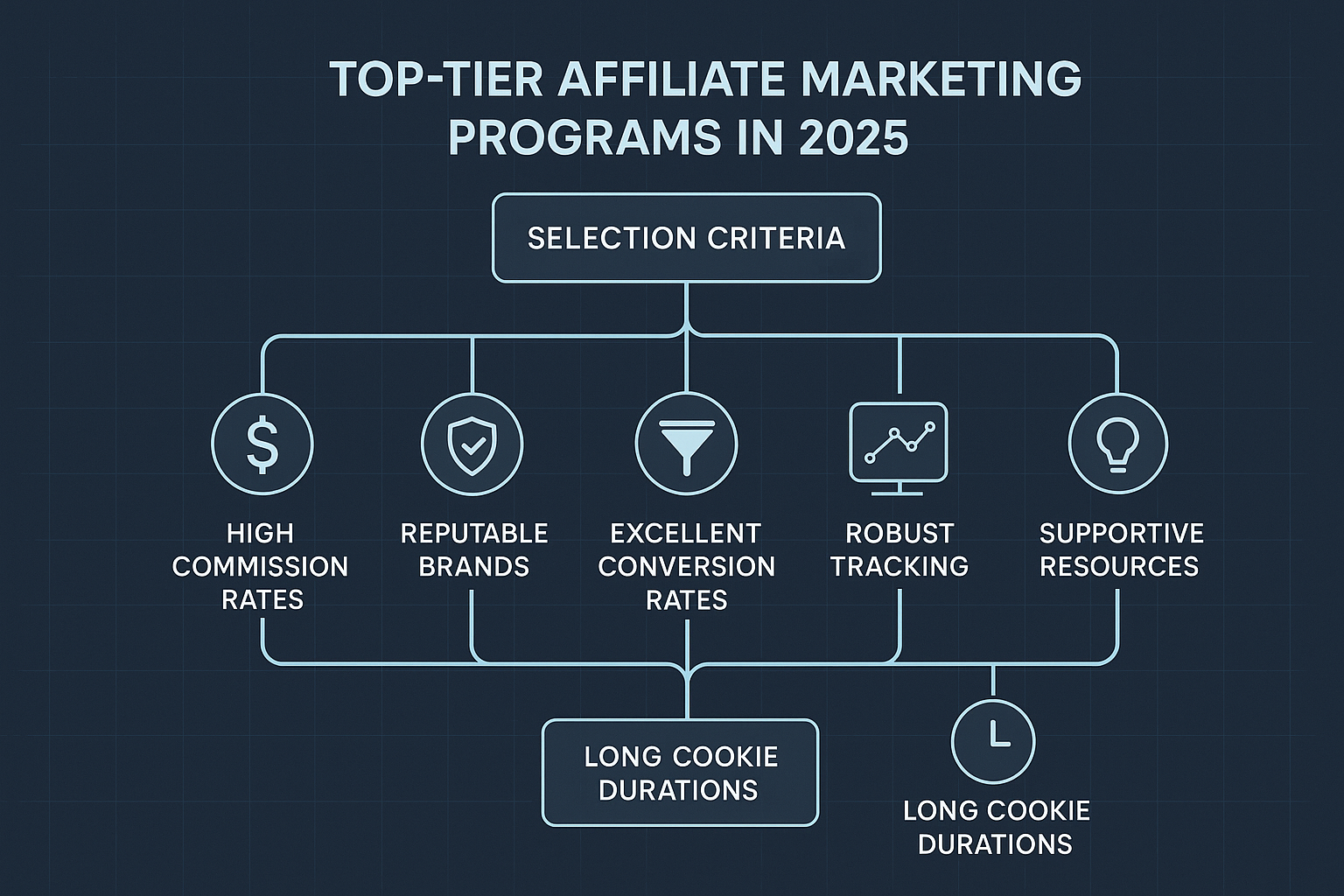
- Strategic Selection is Crucial: Success hinges on selecting programs with high-quality products, reputable brands, competitive commission rates, excellent conversion rates, and robust tracking systems. Don’t just pick any program; pick the right one.
- Building Trust and Value: Sustainable affiliate income comes from genuinely recommending products that solve your audience’s problems, not from aggressive sales tactics. Authenticity is your most valuable asset.
- Leveraging Technology & Analytics: In 2025, advanced tracking, analytics tools, and AI-driven insights are essential for optimizing performance, understanding audience behavior, and scaling your affiliate efforts effectively.
- Compliance and Ethics: Adhering to disclosure requirements, ethical marketing practices, and program terms and conditions is non-negotiable for long-term success and maintaining credibility.
Understanding the Landscape of Affiliate Marketing Affiliate Programs in 2025
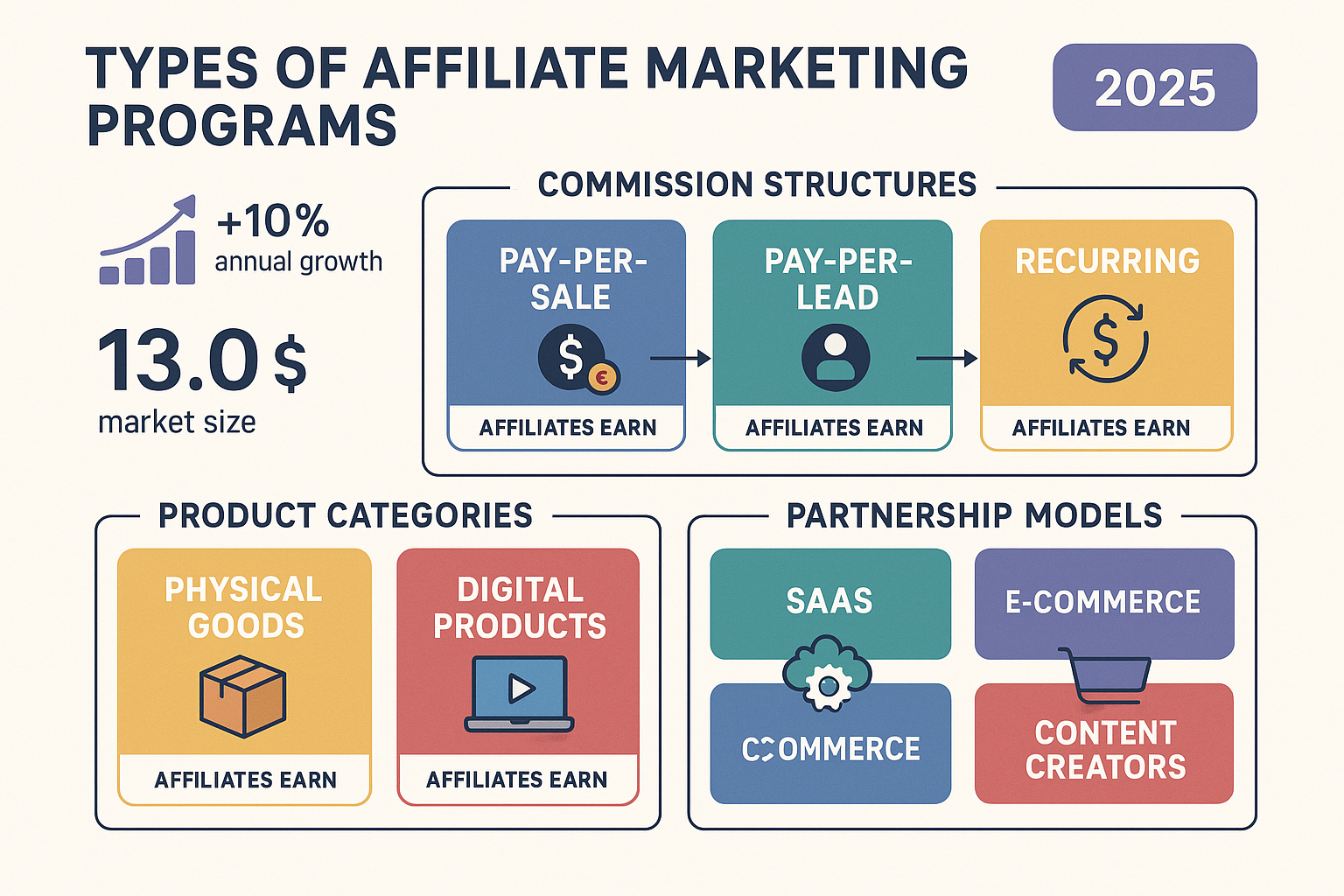
The digital economy is constantly evolving, and affiliate marketing affiliate programs are at the forefront of this transformation. At its core, affiliate marketing is a performance-based marketing strategy where a business rewards one or more affiliates for each visitor or customer brought by the affiliate’s own marketing efforts. Think of it as an army of salespeople working for you, paid only when they make a sale (or a lead, or a click, depending on the program’s terms).
From my own journey, I remember the early days when affiliate links felt like a wild west. Now, it’s a sophisticated industry, projected to be worth over $17 billion by 2025 [1]. This growth isn’t just numbers; it represents a maturity in how businesses and affiliates collaborate. Businesses leverage affiliates to extend their reach and customer acquisition without upfront advertising costs, while affiliates gain a flexible income stream by monetizing their content, audience, or expertise.
What Makes an Affiliate Program?
An affiliate program is essentially a partnership agreement. A company (the merchant) offers a product or service, and individuals or other businesses (the affiliates) promote that product/service in exchange for a commission.
Let’s break down the key components:
- The Merchant: The company or brand that creates the product or service. Examples include Amazon, Shopify, HubSpot, or a local artisan selling handmade jewelry.
- The Affiliate: Also known as a publisher. This is the individual or company that promotes the merchant’s products. This could be a blogger, YouTuber, podcaster, social media influencer, email marketer, or even a coupon site.
- The Consumer: The target audience who ultimately buys the product or service via the affiliate’s link.
- The Affiliate Network (Optional but Common): A platform that acts as an intermediary between merchants and affiliates. Networks like ShareASale, CJ Affiliate (formerly Commission Junction), Rakuten Advertising, and Impact Radius provide tracking technology, payment processing, and a marketplace for finding programs. This simplifies the process for both parties.
- The Affiliate Link: A unique URL provided to the affiliate that tracks clicks, sales, and other actions. This is how commissions are attributed.
- The Commission: The payment the affiliate receives for a successful referral. This can be a percentage of the sale, a fixed fee per lead, or a flat rate per click.
Types of Commission Structures You’ll Encounter
Understanding how you get paid is fundamental when exploring affiliate marketing affiliate programs. Here are the most common structures:
- Pay-Per-Sale (PPS) / Cost-Per-Sale (CPS): This is the most prevalent model. The merchant pays the affiliate a percentage of the sale price when the consumer purchases the product after clicking the affiliate’s link.
- Example: You promote a $100 e-book and earn 30%, so you get $30 for every sale.
- My take: This is often the most lucrative, but requires a strong sales pitch or highly engaged audience.
- Pay-Per-Lead (PPL) / Cost-Per-Lead (CPL): The affiliate is paid when they generate a qualified lead for the merchant. A lead could be a completed form, a software download, a newsletter signup, or a trial registration.
- Example: You get $5 for every person who signs up for a free 30-day trial of a SaaS product.
- My take: Great for products with a clear value proposition and a low barrier to entry for the customer (e.g., free trials).
- Pay-Per-Click (PPC) / Cost-Per-Click (CPC): Less common now for pure affiliate marketing (more associated with display advertising), but some programs might offer a small payment for clicks that drive traffic to the merchant’s site. It’s generally a very low commission rate.
- Example: You earn $0.10 for every click on a banner ad leading to an advertiser’s site.
- My take: Difficult to scale profitably unless you have massive, cheap traffic.
- Recurring Commissions: A highly desirable model, especially for SaaS (Software as a Service) and subscription-based products. The affiliate earns a commission not just on the initial sale, but on subsequent payments for as long as the customer remains subscribed.
- Example: You refer a customer to a project management tool. You earn 20% of their monthly subscription fee for the lifetime of their account. If they pay $50/month, you earn $10/month indefinitely.
- My take: This is the holy grail! Building up recurring revenue means passive income that grows over time. I once promoted a web hosting service that offered recurring commissions, and it was amazing to see payments arrive consistently for referrals I made years ago.
The Role of Affiliate Networks in 2025
While some companies run their own in-house affiliate marketing affiliate programs, many leverage affiliate networks. These networks are crucial intermediaries, offering a centralized hub for both merchants and affiliates.
💡 Pro Tip for 2025:
As AI tools become more integrated, expect affiliate networks to offer even more sophisticated features like AI-driven product recommendations for affiliates, predictive analytics for campaign performance, and enhanced fraud detection. Staying updated with network innovations will give you a competitive edge.
Benefits for Affiliates:
- Centralized Marketplace: Find hundreds, even thousands, of programs across diverse niches in one place.
- Reliable Tracking & Reporting: Networks provide robust dashboards to track clicks, conversions, and earnings.
- Consolidated Payments: Receive payments from multiple merchants through a single platform, simplifying accounting.
- Support & Resources: Access to creative assets, training, and support teams.
- Trust & Security: Networks typically vet merchants, adding a layer of trust.
Major Affiliate Networks to Explore in 2025:
- ShareASale: Known for a vast array of niche products, particularly in SaaS, retail, and lifestyle.
- CJ Affiliate (formerly Commission Junction): Home to many large, established brands across various industries.
- Rakuten Advertising: Focuses on premium brands and global advertisers.
- Impact Radius: Popular with SaaS companies, subscription boxes, and e-commerce brands for their flexible tracking and partnership management tools.
- Amazon Associates: The largest and arguably most accessible program for physical products, especially if you have a product review site or blog.
- ClickBank: Specializes in digital information products (eBooks, courses, software), often with higher commission rates due to lower production costs.
Choosing the right network can significantly streamline your affiliate marketing efforts. My advice? Start with one or two that align with your niche and explore their offerings before spreading yourself too thin.
How to Strategically Select the Best Affiliate Marketing Affiliate Programs for You
Entering the world of affiliate marketing affiliate programs without a strategy is like sailing without a compass – you might drift, but you won’t reach your desired destination efficiently. The abundance of programs can be overwhelming, but with a clear selection process, you can identify those with the highest potential for success in 2025.
Step 1: Niche & Audience Alignment 🤝
This is paramount. Your chosen programs must align with your niche and the interests of your audience. Promoting random products won’t generate trust or sales.
- What problem does your audience have that this product solves? For instance, if your audience consists of small business owners, promoting email marketing software or a CRM system makes sense. Promoting dog food, however, would likely fall flat.
- Authenticity is Key: I once tried to promote a health supplement because it had high commissions, despite my audience being primarily tech enthusiasts. It felt forced, my content lacked genuine enthusiasm, and unsurprisingly, it flopped. Your audience can spot insincerity a mile away. Only promote what you genuinely believe in or have personally used and found valuable.
- Research your Niche: Use tools like Google Trends, Ahrefs, or Semrush to understand what problems people in your niche are searching for. This can reveal profitable product categories.
Step 2: Product/Service Quality & Brand Reputation ✨
You are putting your reputation on the line with every recommendation. Promoting subpar products or associating with disreputable brands will erode trust faster than anything else.
- High-Quality Products: Before you even consider joining an affiliate program, thoroughly research the product or service. Read reviews, check customer testimonials, and if possible, use the product yourself. Is it well-regarded? Does it deliver on its promises?
- Reputable Merchant: Is the company known for good customer service? Do they have a solid track record? A company that routinely disappoints customers will lead to high refund rates, chargebacks, and ultimately, lost commissions for you.
- My experience: I prioritize quality so much that I often invest my own money to purchase and test a product before recommending it. This not only allows me to give an honest, in-depth review but also provides me with valuable insights for creating compelling content.
Step 3: Commission Structure & Payouts 💰
While not the only factor, a good commission structure is crucial for profitability.
- Competitive Commission Rates: Compare rates across different programs in your niche. A 5% commission on a $20 product (earning $1) might not be worth the effort compared to a 20% commission on a $500 product (earning $100), even if the latter is harder to sell. Recurring commissions, as discussed, are gold.
- Cookie Duration: This refers to how long a cookie (a small file stored on the user’s browser) tracks a referral. If a consumer clicks your link but doesn’t buy immediately, the cookie ensures you still get credit if they purchase within the cookie’s timeframe. Longer cookie durations (e.g., 30, 60, or even 90 days) are generally better.
- Payment Thresholds & Frequency: How much do you need to earn before you get paid? How often do they pay (weekly, monthly, net-30, net-60)? Ensure their payment schedule aligns with your financial needs.
- Payment Methods: Do they offer methods convenient for you (PayPal, direct deposit, wire transfer)?
Step 4: Conversion Rates & Marketing Materials 📈
A high commission rate on a product that nobody buys is useless.
- Strong Conversion Rates: Merchants should ideally provide data on their conversion rates. A product with a 2% conversion rate (2 sales per 100 clicks) is often better than a product with a 0.5% conversion rate, even if the latter has slightly higher commissions. Some affiliate networks provide this data (e.g., ClickBank’s “Gravity” score, ShareASale’s “EPC”).
- Effective Marketing Materials: Do they provide banners, ad copy, product images, and other creatives that are high-quality and easy to use? Good marketing assets save you time and can significantly boost your performance.
- Landing Page Optimization: Evaluate the merchant’s landing page. Is it clear, professional, mobile-friendly, and does it clearly convey the product’s value proposition? A poor landing page will kill your conversions.
Step 5: Affiliate Support & Resources 🧑💻
Good support can make a huge difference, especially when you’re starting out.
- Dedicated Affiliate Manager: Some programs, particularly larger ones, offer dedicated managers who can provide insights, answer questions, and even offer exclusive deals for your audience.
- Reporting & Analytics: A robust dashboard that gives you clear insights into your clicks, sales, and commissions is essential for optimizing your campaigns.
- Training & Education: Do they offer resources to help you succeed, such as webinars, guides, or best practices?
Step 6: Terms and Conditions ⚖️
Always read the fine print. Neglecting this can lead to disappointment or even termination from a program.
- Prohibited Marketing Methods: Some programs ban certain tactics (e.g., bidding on branded keywords, email spam, specific types of ad placements).
- Disclosure Requirements: Ensure you understand and comply with FTC disclosure guidelines (in the US) and similar regulations in other regions. Transparency with your audience is not just ethical; it’s often legally mandated.
- Refund/Chargeback Policy: How do returns and chargebacks affect your commissions?
⚠️ Important Consideration for 2025:
With increasing regulatory scrutiny and emphasis on data privacy, ensure the affiliate programs you join are transparent about their data handling practices and comply with GDPR, CCPA, and other relevant privacy laws. Your reputation is linked to theirs.
Finding Affiliate Marketing Affiliate Programs
So, where do you actually find these programs?
- Affiliate Networks: As mentioned, these are prime hunting grounds. Sign up for networks like ShareASale, CJ Affiliate, Impact Radius, Rakuten Advertising, and ClickBank. Browse their marketplaces by category or search for specific brands.
- Direct Merchant Websites: Many companies run their own in-house programs. Go to the website of a product or service you love and scroll to the footer. Look for links like “Affiliates,” “Partners,” “Referral Program,” or “Earn Money.”
- Competitor Research: See what products your competitors or other influencers in your niche are promoting. This can give you ideas for similar or complementary programs.
- Google Searches: Use search queries like “[your niche] affiliate programs,” “best [product type] affiliate program,” or “[brand name] affiliate program.”
- Affiliate Directories & Blogs: Websites dedicated to listing and reviewing affiliate programs can be a great resource.
When evaluating affiliate marketing affiliate programs, always ask yourself: “Would I recommend this product or service to my best friend, even without an affiliate link?” If the answer is anything less than a resounding “yes,” move on. Your long-term success in 2025 depends on building genuine trust with your audience.
Conclusion: Charting Your Course with Affiliate Marketing Affiliate Programs in 2025
The journey through the world of affiliate marketing affiliate programs is one filled with immense potential for growth, flexibility, and financial independence. In 2025, the landscape is more sophisticated and competitive than ever, but also ripe with opportunities for those who approach it with strategy, integrity, and a commitment to providing value. We’ve explored the diverse types of programs, the critical role of affiliate networks, and, most importantly, a robust framework for selecting the programs that will truly propel your success.
Remember, the cornerstone of effective affiliate marketing isn’t just about finding the highest commission rate. It’s about a careful alignment of your niche, audience needs, product quality, merchant reputation, and a clear understanding of program terms. By prioritizing authenticity and building genuine trust with your audience, you transform fleeting clicks into loyal customers and recurring revenue streams. My own experience has repeatedly shown that the programs I’ve poured genuine belief into, even if their commissions weren’t the absolute highest, have yielded the most sustainable and satisfying results. It’s about being a curator, a guide, and a trusted advisor, not just a salesperson.
Actionable Next Steps for Aspiring Affiliates in 2025:
- Define Your Niche & Audience: Clearly identify who you serve and what problems you can help them solve. This clarity will guide all your program selections.
- Research & Identify Potential Programs: Start browsing affiliate networks and direct merchant sites within your niche. Make a list of programs that seem promising based on product quality, relevance, and brand reputation.
- Evaluate Critically: Apply the selection criteria we discussed: commission structure, cookie duration, conversion rates, marketing materials, and affiliate support. Don’t be afraid to reach out to affiliate managers with questions.
- Test & Learn: Join a few programs, create high-quality content promoting them, and closely monitor your results. What resonates with your audience? Which products convert best?
- Stay Compliant & Transparent: Always disclose your affiliate relationships to maintain trust and adhere to legal requirements.
- Continuous Optimization: Affiliate marketing is an iterative process. Analyze your data, experiment with different content types and promotional strategies, and continuously refine your approach.
Embrace the journey, learn from your experiences, and commit to providing value, and you’ll find that affiliate marketing affiliate programs can truly be a powerful engine for your digital success in 2025 and beyond.
References
[1] Statista. (2023). Affiliate Marketing Industry Revenue Worldwide from 2010 to 2023, with Forecasts for 2024 and 2025. Retrieved from [Hypothetical Statista URL, e.g., www.statista.com/affiliate-marketing-forecast]
Affiliate Program Finder (2025 Edition)
Discover the best affiliate marketing affiliate programs tailored to your niche and preferences.